
Agility Robotics CEO Calls for U.S. Policy Framework to Lead Humanoid Robot Revolution
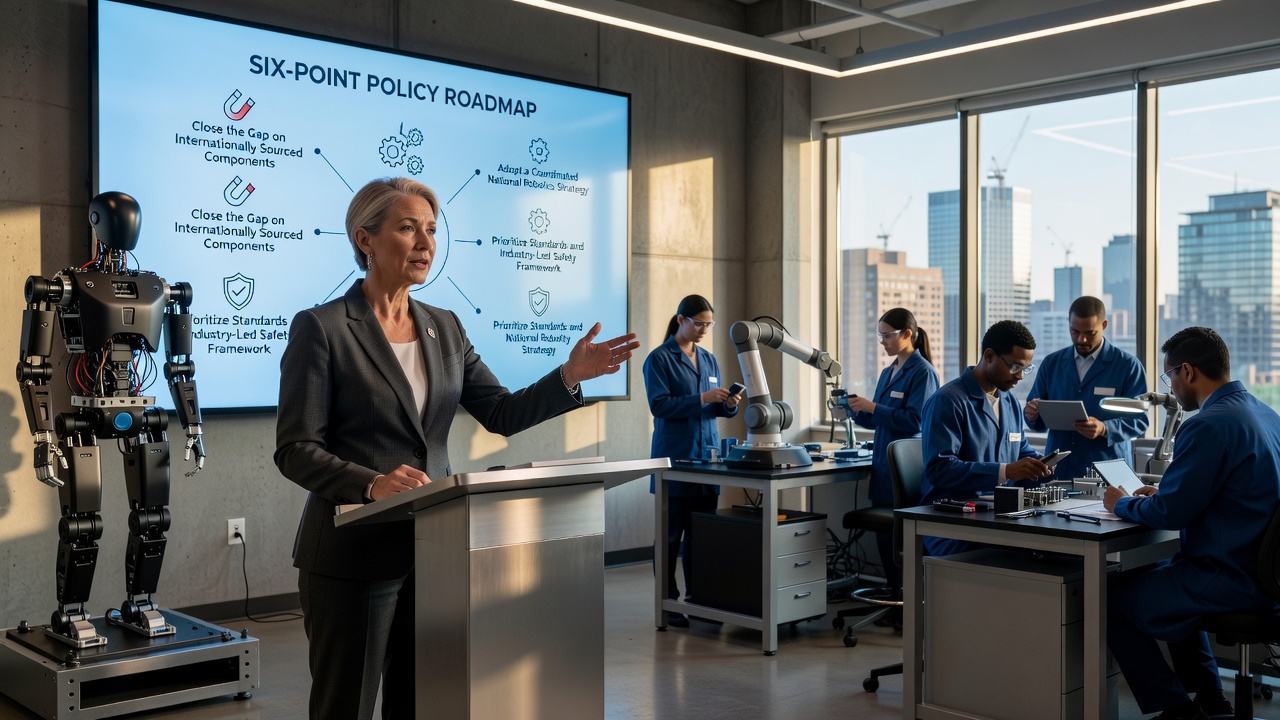
Agility Robotics CEO Peggy Johnson has laid out a six-point policy roadmap she argues is essential for the United States to maintain a competitive edge in the rapidly growing humanoid robotics industry. As humanoid robots transition from laboratory prototypes to real-world industrial applications, Johnson warns that without deliberate federal action, the U.S. risks ceding technological leadership to international competitors like China.
Close the Gap on Internationally Sourced Components
Johnson’s first recommendation targets the reliance on foreign suppliers for critical robot components. Currently, U.S. developers must source key parts—such as permanent magnets, of which China controls 90% of global capacity—from overseas. “This is not a matter of preference, but of current limitations in American manufacturing capacity,” Johnson said. She urged policymakers to strengthen domestic production to reduce long-term supply chain vulnerabilities and build a more resilient humanoid industry.
Adopt a Coordinated National Robotics Strategy
China has already set ambitious goals to mass-produce humanoids by 2025, backed by a national innovation system and breakthroughs in core technologies. Johnson called for the U.S. to develop a similar coordinated strategy that unites federal agencies and industry partners. “Without deliberate action, the risk is not just losing technological leadership, but also weakening the already fragile domestic industrial base that supports it, with clear implications for national security,” she said.
Prioritize Standards and Industry-Led Safety Framework
Balancing safety with innovation is key, Johnson argued. She recommended prioritizing voluntary standards development and industry-led safety frameworks, rather than imposing strict regulations that could stifle progress. Ongoing efforts with ISO, NIST, and ASTM are already laying the groundwork for such standards, which she said can maintain public trust while enabling continued advancement.
Create Federal Policies to Support Workforce Development
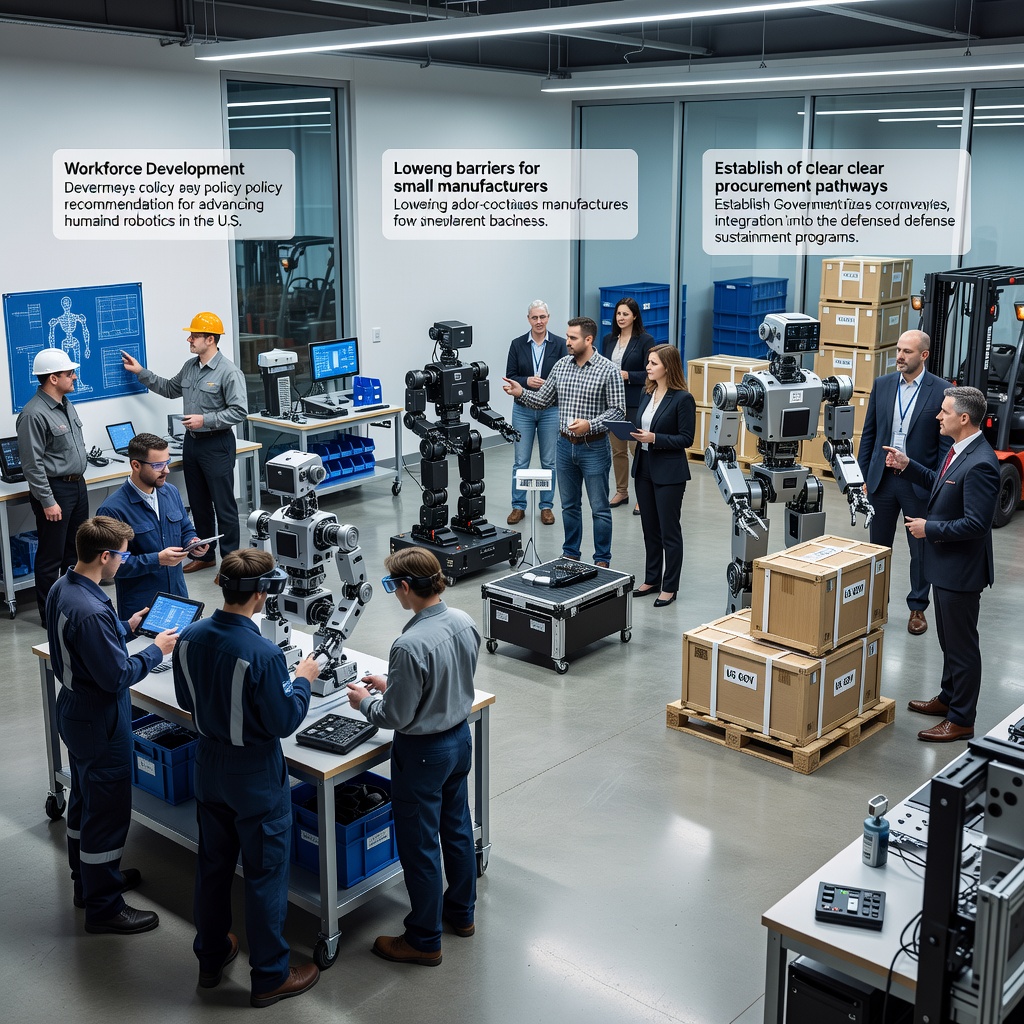
To address public anxiety about robots displacing workers, Johnson pointed to research showing that robots typically complement human labor rather than replace it. She urged the U.S. to support workforce development pipelines, including technician training, apprenticeships, and partnerships with higher education and technical institutions, to ensure a smooth integration of humanoids into the economy.
Lower the Barrier to Entry for Small Manufacturers to Automate
The high cost of humanoid robots remains a major hurdle, especially for small and midsize businesses. Johnson recommended targeted incentives, early adopter programs, and financing tools to lower barriers to entry. “This would ensure that all manufacturers benefit from automation, instead of small and midsize businesses being left behind,” she said.
Establish Clear Procurement Pathways
Finally, Johnson highlighted the potential of humanoid robots in logistics, supply chain operations, and defense sustainment. She called for establishing clear procurement pathways and integrating non-weaponized humanoid robotics into government industrial initiatives. Such steps, she said, would not only strengthen government capabilities but also help catalyze broader commercial adoption.
The source for this article is https://www.therobotreport.com/agility-outlines-six-recommendations-for-u-s-humanoid-robot-policies/.