
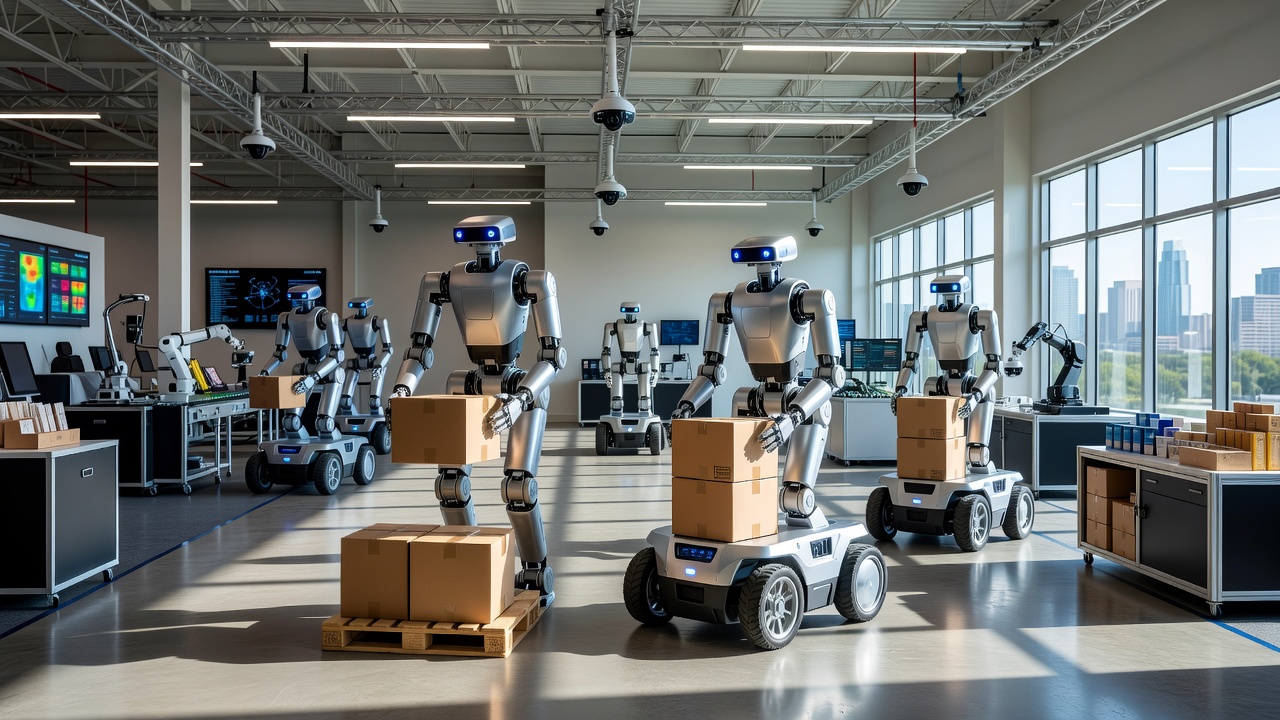
Apptronik Unveils Apollo 2 Humanoid Robot and Expands Robot Park Training Facility
Apptronik made two major announcements yesterday: the launch of Apollo 2, an updated humanoid robot, and the opening of its expanded Robot Park in Austin, Texas—a flagship data collection and training facility for humanoid robots. The company aims to accelerate real-world deployment through large-scale data gathering and continuous learning.
Apollo 2 Available in Bipedal and Wheeled Configurations
The new Apollo 2 is designed as a modular AI-powered humanoid, offered in both bipedal and wheeled-base versions. Apptronik says the robot is built to learn real-world work by collecting diverse data across many tasks and environments. The robot has already served as the workhorse behind Robot Park for more than a year, enabling continuous deployment at customer and partner sites.
As part of Apptronik’s research partnership with Google DeepMind, data collected by Apollo 2 helps advance Gemini Robotics, Google DeepMind’s foundation models for robotics.
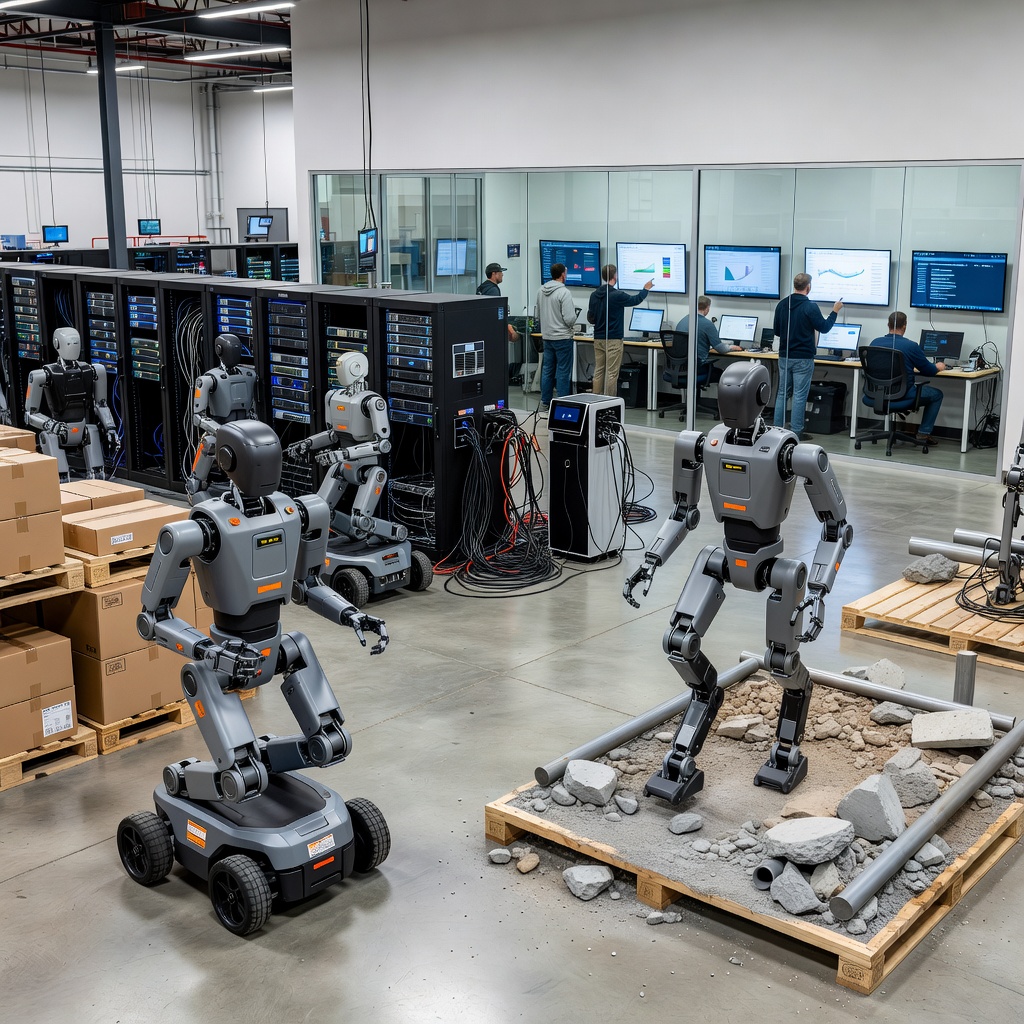
Robot Park: A Hub for Scalable Data Collection
The nearly 90,000-square-foot facility in Austin joins a growing network of Apptronik Robot Parks at customer and partner sites worldwide. Inside, both bipedal and wheeled Apollo 2 systems perform tasks in logistics, manufacturing, retail, and other customer-driven activities. Apptronik said it has deployed similar data-collection workflows across the network, including at Google DeepMind and customers like Mercedes-Benz and GXO.
The company captures high-quality training data through a combination of teleoperation and autonomous execution, using the dataset to train Gemini Robotics AI models. This multi-modal approach—combining physical experience and high-fidelity simulations—accelerates both hardware design and algorithmic development.
Modular Design Prioritizes Safety and Adaptability
By offering Apollo in modular configurations, Apptronik optimizes data collection across different operational environments. The wheeled-base conforms to existing industrial safety standards for mobile robots, allowing easy integration into customer operations. The bipedal version offers maximum adaptability for complex environments, helping the company continuously refine walking safety and reliability.
“For truly useful humanoid robots, safety and reliability have to advance alongside capability,” said Barry Phillips, chief commercial officer. “The modular design of Apollo is a direct response to customer demand for adaptable automation.”
Integrated System for Rapid Development
Apptronik claims that the Robot Park facility, Apollo 2, and its research partnership form an integrated system for quickly developing and deploying humanoid robot intelligence. The company says everything it proves with Apollo 2 directly powers the development of its commercial product, Apollo 3.
“The industry has spent years showing what robots can do in demos. We’re focused on what they can do every day on the job,” said Jeff Cardenas, co-founder and CEO. “What we’re building is a continuous learning loop with the Google DeepMind Robotics team: robots working, collecting data, and improving with every cycle, in real environments, on real tasks.”
Background and Funding
Apollo is based on nearly a decade of development on 15 previous robots, including NASA’s Valkyrie. Apptronik started at the Human Centered Robotics Lab at the University of Texas at Austin and now employs nearly 300 people. Earlier this year, the company raised $520 million, bringing total capital to nearly $1 billion.
The source for this article is https://www.therobotreport.com/apptronik-unveils-apollo-2-flagship-data-collection-training-facility/.