
Are Suppliers Ready for New Robot Safety Standards?
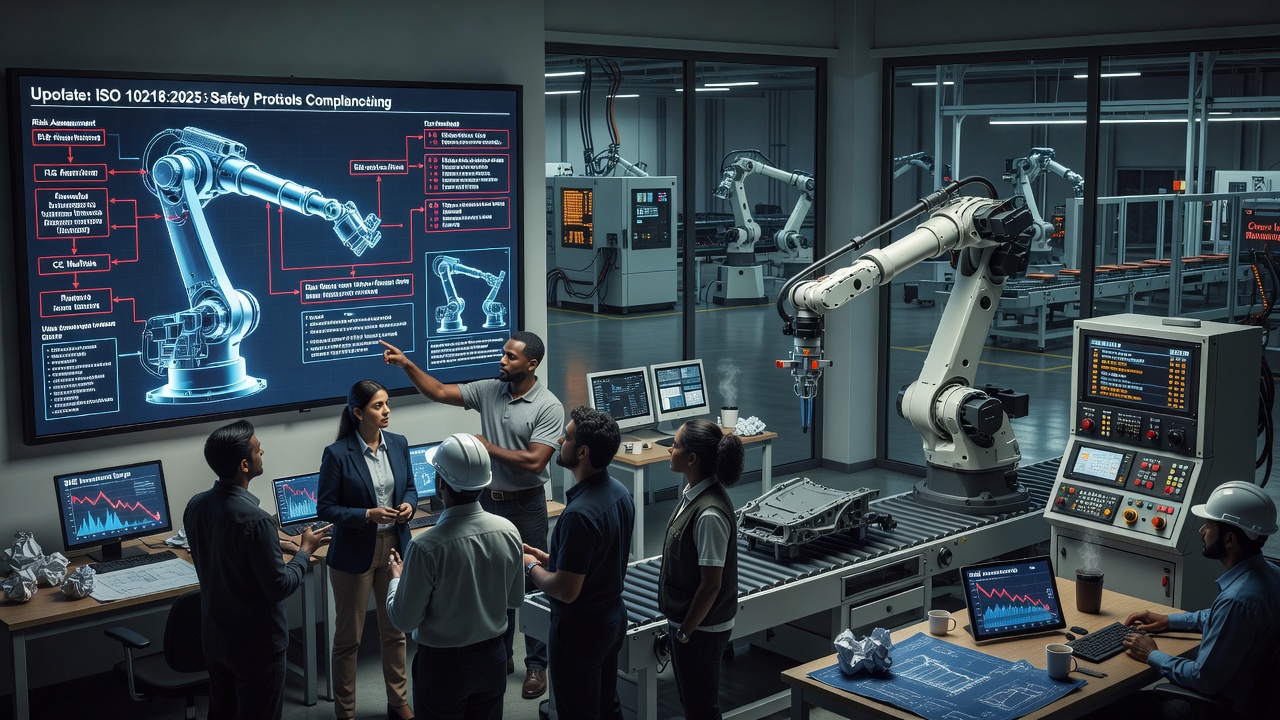
Questions surrounding the updated ISO 10218 safety standard are growing across the robotics industry. The revised standard, ISO 10218:2025, is central to CE marking requirements in Europe and will become mandatory under the new European Machinery Regulation (EU 2023/1230), which takes effect on January 20, 2027. However, the formal listing of the standard in the Official Journal of the European Union—a prerequisite for full legal effect—remains ongoing as of mid-2026, and could slip beyond the 2027 deadline if historical timelines are a guide.
In the United States, the equivalent standard, ANSI/RIA R15.06-2025, was released in September 2025 and aligns with the international framework. Unlike Europe’s binding regulations, the U.S. standard is voluntary. Nonetheless, major customers, system integrators, and regulatory bodies such as OSHA often treat compliance as a de facto requirement, making it commercially necessary for vendors targeting the American market.
Market Pressures and Compliance Costs
The European robotics market has been subdued, with contraction from 2023 to 2025 driven by weakness in manufacturing, particularly in the automotive sector. Small and midsize enterprises face ongoing cost pressures, and the safety standard update demands additional investment from robot vendors. While compliance poses a near-term burden, suppliers that manage the transition effectively will be better positioned as demand recovers and European customers become more safety-conscious.
In the U.S., the market has shown signs of recovery since late 2025, but geopolitical tensions and high oil prices continue to weigh on the pace of improvement. For U.S. suppliers, the new standard adds another layer of operational consideration, alongside tariffs and uncertainty.
Diverging Supplier Preparedness
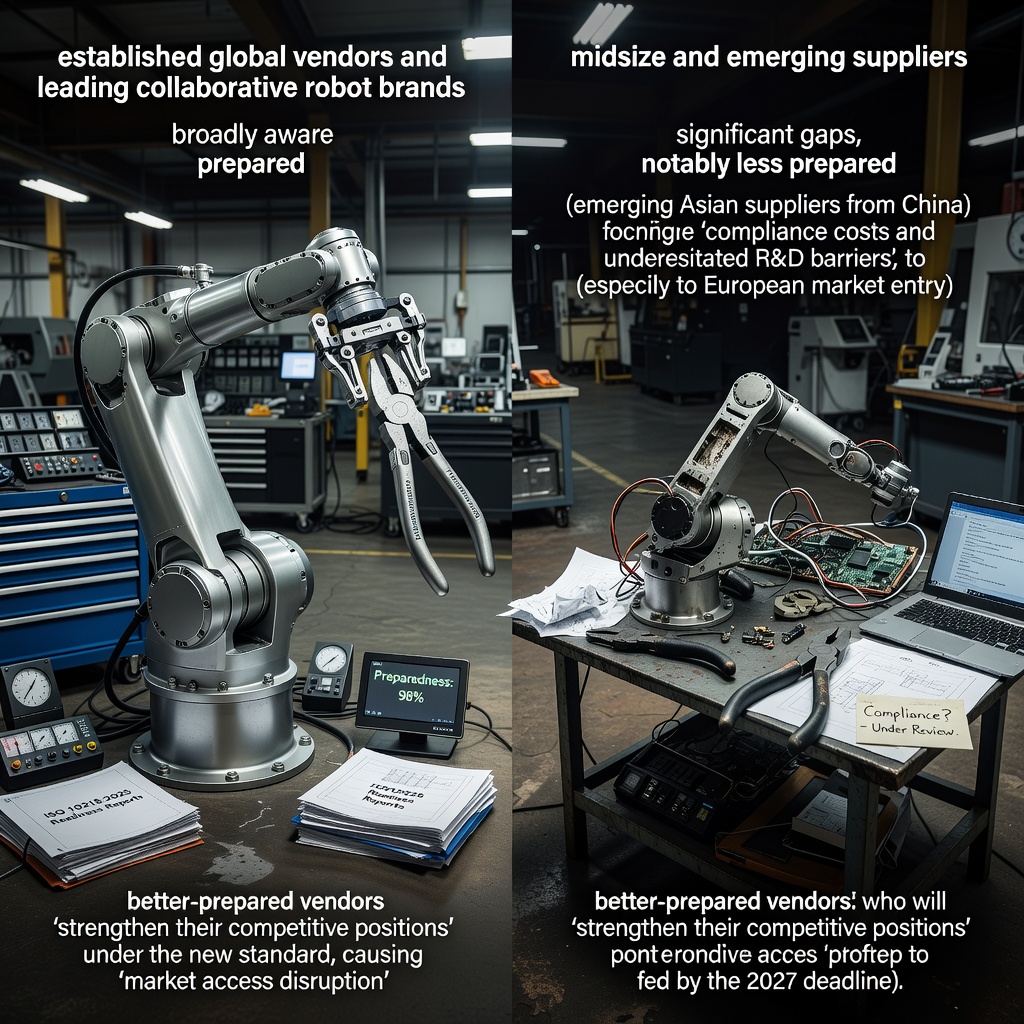
Interviews with robot manufacturers reveal sharp differences in readiness. Established global vendors and leading collaborative robot brands are broadly aware of the upcoming changes and claim to be prepared. In contrast, midsize and emerging suppliers show significant gaps. Even some European-based manufacturers have limited visibility into ISO 10218:2025’s specific requirements.
Emerging Asian suppliers, particularly from China, are notably less prepared. For many, compliance costs and associated R&D represent a significant and underestimated barrier to market entry in Europe.
Competitive Implications
If ISO 10218:2025 is formally adopted ahead of the 2027 deadline, the compliance dynamic is expected to reinforce the market position of established global players, which have the resources to manage the transition. Newer Asian entrants face a meaningful headwind as they invest in European expansion. However, broader weakness in European manufacturing and cost pressures on SMEs may push full legal transition beyond 2027.
In the U.S., established suppliers like FANUC dominate, and the new standard will add incremental pressure on emerging players. Overall, the update favors better-prepared vendors and will strengthen their competitive positions. The direction is clear: ISO 10218:2025 represents long-term industry improvement, but uneven readiness could cause market access disruption for underprepared companies. Robot manufacturers and system integrators should treat preparation as a strategic priority.
The source for this article is https://www.therobotreport.com/are-suppliers-ready-for-new-robot-safety-standards/.