
Automated Filling Lines Set New Quality Benchmarks in Supplement Manufacturing
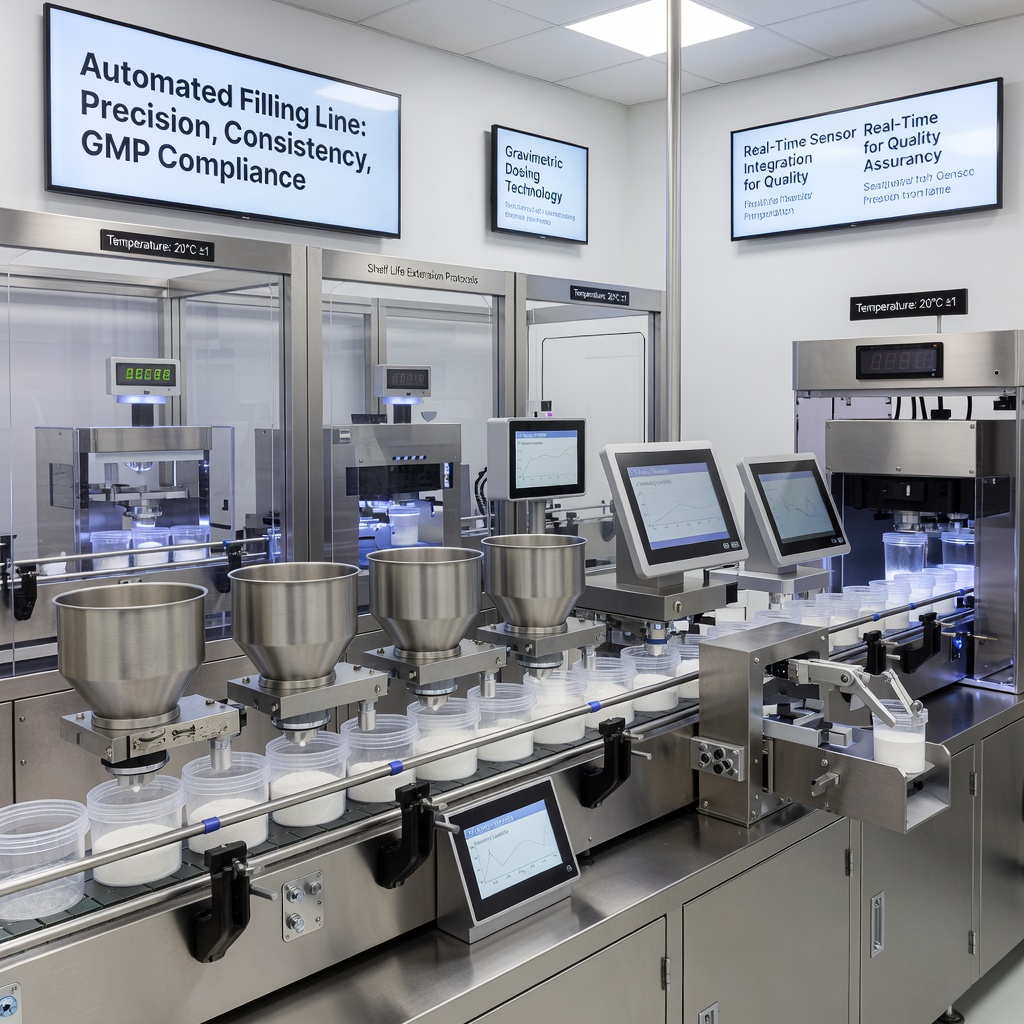
The integration of automated filling lines is fundamentally reshaping supplement manufacturing, driving higher standards for precision, consistency, and regulatory compliance. These systems combine gravimetric dosing, real-time sensors, and servo-driven technologies to deliver exact fill weights at unprecedented speeds. For manufacturers, the shift from manual operations to automation not only boosts throughput but also introduces robust quality assurance protocols, including continuous monitoring and environmental controls. As the industry embraces custom powder manufacturing at scale, these advancements are becoming essential for meeting Good Manufacturing Practices (GMP) and consumer expectations for clean-label, third-party-tested products.
Impact on Quality and Consistency
Modern automated filling lines minimize human error by using gravimetric dosing and servo-driven augers to maintain tight control over fill weights, ensuring every container meets label claims. In powder supplement manufacturing, real-time sensors track variables such as humidity and weight drift, enabling immediate corrective actions. Automated reject systems and checkweighers divert non-compliant units, preventing defective products from reaching the market. Additionally, climate-controlled filling zones preserve ingredient stability for sensitive formulations like probiotics and enzymes, extending shelf life. These integrated controls create a comprehensive quality ecosystem where every factor affecting product integrity is continuously monitored and documented.
Technological Advances in Filling and Monitoring
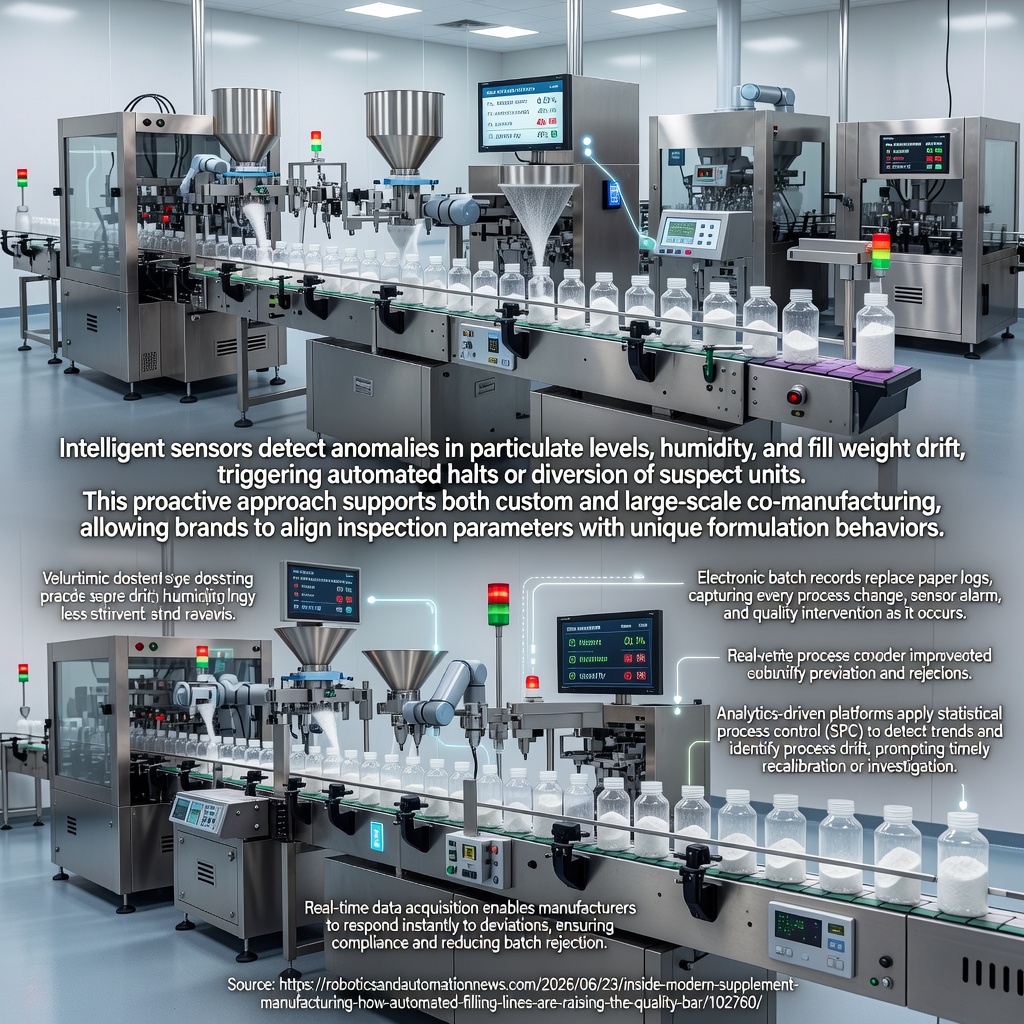
Advanced equipment, including vision inspection systems and inline checkweighers, adds multiple layers of protection by verifying container integrity, fill weights, and labeling accuracy. Gravimetric dosing systems achieve high precision, while volumetric options offer flexibility for less demanding specifications. Intelligent sensors detect anomalies in particulate levels, humidity, and fill weight drift, triggering automated halts or diversion of suspect units. This proactive approach supports both custom and large-scale co-manufacturing, allowing brands to align inspection parameters with unique formulation behaviors. Real-time data acquisition enables manufacturers to respond instantly to deviations, ensuring compliance and reducing batch rejection.
Streamlined Documentation and Continuous Improvement
Electronic batch records replace paper logs, capturing every process change, sensor alarm, and quality intervention as it occurs. This systematized documentation accelerates traceability and simplifies audits, making it easier for manufacturers to demonstrate production integrity. Analytics-driven platforms apply statistical process control (SPC) to detect trends and identify process drift, prompting timely recalibration or investigation. In nutrition powder co-manufacturing, data-driven insights refine operations continuously, supporting efficiency and maintaining high quality. For brands pursuing custom powder manufacturing at scale, standardized KPIs and validated corrective actions strengthen continuous-improvement cycles, allowing manufacturers to tune controls without slowing production as regulatory expectations evolve.
The source for this article is https://roboticsandautomationnews.com/2026/06/23/inside-modern-supplement-manufacturing-how-automated-filling-lines-are-raising-the-quality-bar/102760/.