
Can AI Build a Jet Engine? JARVIS Challenge Tests Role of AI Copilots in Tough-Tech Engineering
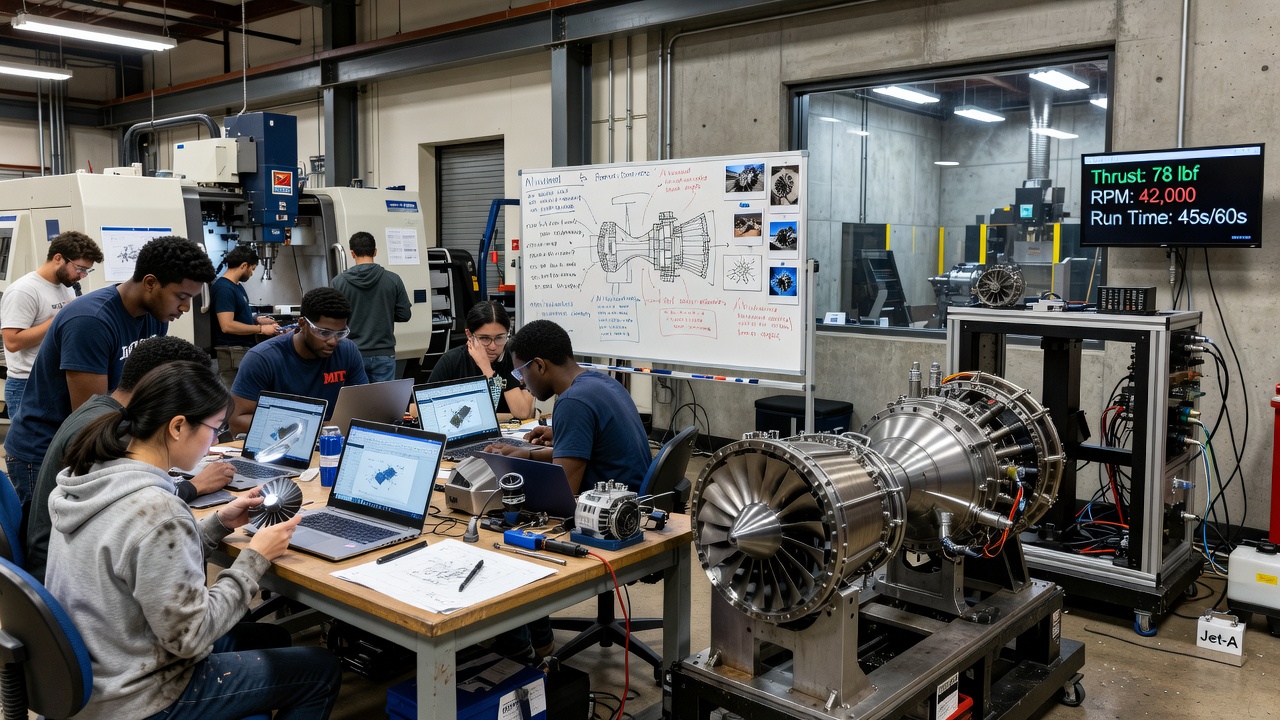
Artificial intelligence has already transformed software development, but can it accelerate the design and construction of complex physical systems like a jet engine? This past semester, MIT’s JARVIS Challenge (Jet-engine AI Research and Validation Intensive Sprint) put that question to the test, giving undergraduates four weeks to design, fabricate, assemble, and test a small gas turbine aero engine—with AI as their primary engineering partner. The goal was a single-spool jet engine producing 50–100 pounds of thrust on Jet-A fuel, capable of five 60-second runs.
Teams and Tools
Thirty-one students from nearly every engineering department organized into seven teams, ranging from all-first-years to groups of seniors. Many had little prior experience with turbomachinery or compressible flows. They had access to MIT’s machine shops, commercial software like Concepts NREC and SolidWorks, test rigs, and MIT Parley—a newly launched platform aggregating frontier large language models through a single interface. JARVIS leads could monitor how students used AI, including prompts and costs. Unlimited AI use was made possible by support from MIT Lincoln Laboratory and corporate sponsors Safran, Voyager Technologies, and Beehive Industries.
AI’s Strengths and Limitations
In the first week, teams used AI to summarize textbooks, learn design software, source vendors, and create trade studies. One team even tasked a Parley agent as a project manager. But by week two, limitations emerged. Students found that while tools like Claude and ChatGPT filled knowledge gaps and offered design alternatives, they also suffered from hallucinations, sycophancy, and a lack of physical understanding. “AI is a helpful tool … but it can’t do design,” said Elizabeth Tupaj of Team 811 Crew. Teaching assistant John Zhang noted that early frustrations with AI often shaped lasting negative impressions.
In the final weeks, no AI could solve the challenge of working with vendors. “AI searches found vendors we had no rapport with,” students reported. “The vendors who came through were the ones our team had personal relationships with.”
The Human Factor
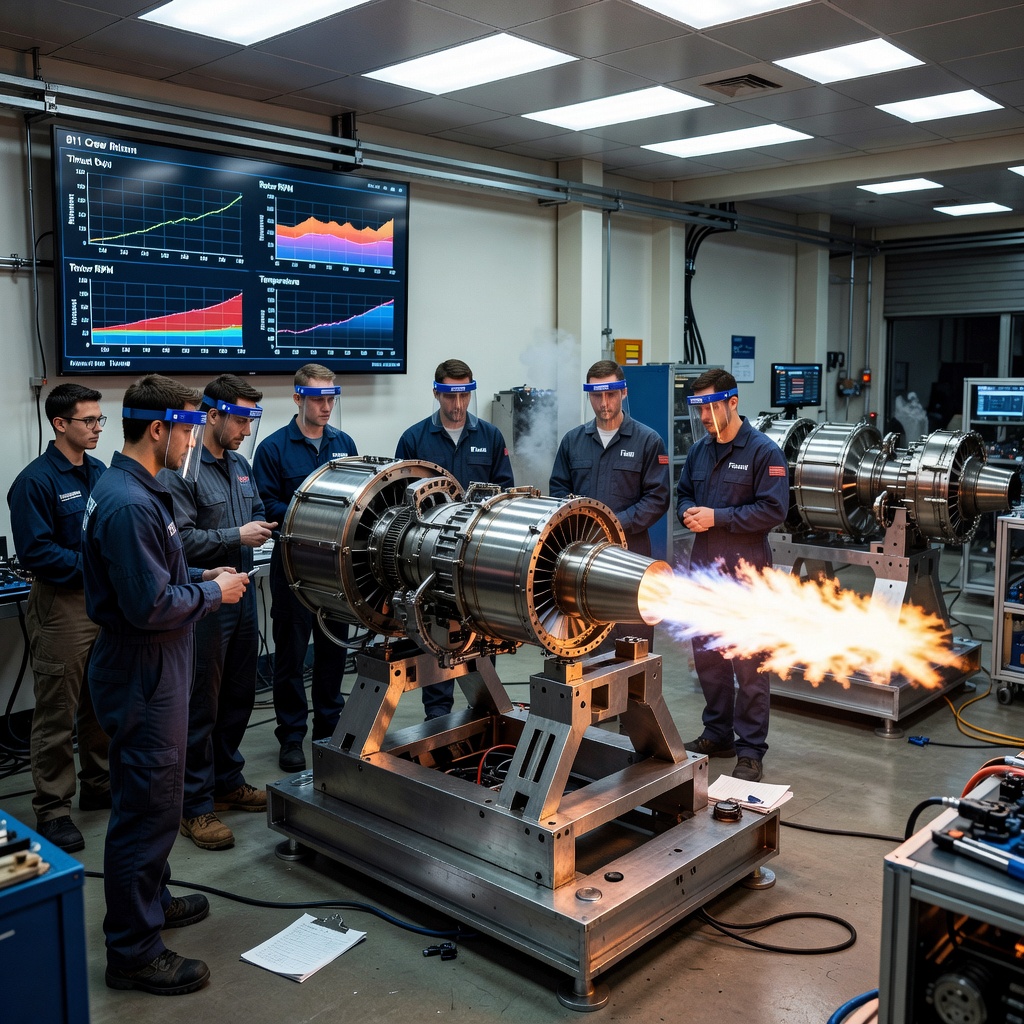
The three finalists advanced to testing. Only Fast and Fractured achieved first-attempt ignition of their mini-combustor despite having no prior gas turbine experience—a result of heavy AI use for architecture comparisons. However, their hot fire was cut short by a rotor rub. The winning team, 811 Crew, had resisted AI throughout, relying on their fundamentals and domain knowledge. “We had people who knew the design software, mechanical engineers who knew how to build anything, and aerospace engineers who had taken classes on gas turbine design,” Tupaj said.
Professor Andreea Bobu observed: “Getting value from AI takes two things: enough expertise to judge what it tells you, and enough curiosity to lean on it. The team that moved fastest was experienced and leaned heavily on AI. The team that won was more resistant. The sweet spot is knowing enough to stay in charge of the tool and being eager to pick it up.”
Outcome and Implications
By the end of May, 811 Crew’s engine started, transitioned to Jet-A, and generated net thrust. Professor Zolti Spakovszky summed up the challenge: “AI can substantially accelerate safety-critical hardware engineering, but engineering judgment remains the decisive differentiator. Manufacturing—not engineering design or analysis—remained the fundamental rate-limiting step.” Professor Zachary Cordero added that education is more valuable than ever in the AI era, with performance in JARVIS correlating strongly with year in school.
The competition demonstrated that small, well-managed teams using AI copilots can compress design-build-test cycles from years to weeks—a development with major implications for workforce structure, R&D timelines, and competitive dynamics in aerospace and beyond.
The source for this article is https://news.mit.edu/2026/can-ai-build-jet-engine-jarvis-challenge-tests-ai-copilots-in-tough-tech-engineering-0714.