
Canadian Industries Are ‘Under-Automated,’ Says Clearpath Robotics Co-Founder
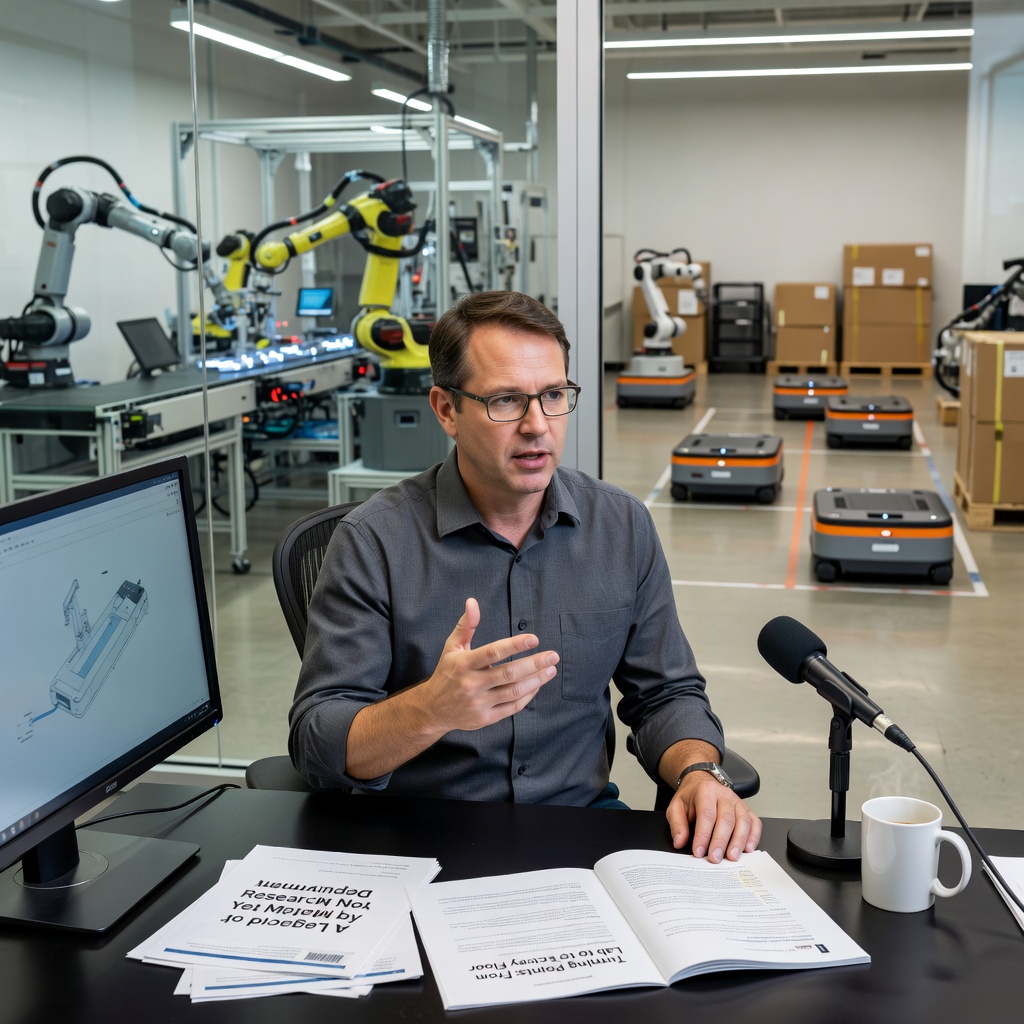
Canada has long been a global leader in robotics research, producing world-class universities, pioneering startups, and innovations that have spread across manufacturing, logistics, agriculture, mining, and defense. Yet despite this strong technical foundation, the country has not always moved as quickly as other leading economies to translate those research strengths into widespread industrial deployment.
Few people have watched that gap more closely than Ryan Gariepy, co-founder of Clearpath Robotics. The company, founded in 2009 as a spinout from the University of Waterloo, became a major supplier of robotic platforms for research and industry. Its offshoot, OTTO Motors, pioneered autonomous mobile robots (AMRs) for manufacturing and logistics. Both companies were acquired by Rockwell Automation in 2023 in one of the most significant milestones in Canadian robotics.
In a recent interview with Robotics & Automation News, Gariepie discussed the turning points that convinced him robotics was becoming commercially viable, the barriers slowing adoption, and the sectors he believes offer the greatest opportunities over the coming decade.
Turning Points: From Lab to Factory Floor
Gariepi identified two key turning points that shifted robotics from a largely academic pursuit to a practical industrial tool. The first, he said, was the maturation of enabling technologies—sensing, computing, actuation, and power—driven by forces outside robotics itself. “We saw that they’d be able to bring robotics outside of the lab, and that’s absolutely what happened.”
The second turning point was the realization that many previously open robotics problems were becoming “solved” in certain environments, paving the way for Clearpath to enter production logistics with OTTO Motors. The 2012 acquisition of Kiva Systems by Amazon also helped spur broader corporate interest in robotics as a real-world solution.
Barriers to Adoption: Cost, Culture, and Confusion
When asked why many Canadian industries remain under-automated, Gariepy was blunt: “Most of the industries in Canada are under-automated with respect to where they could be.” He pointed to three main factors: cultural resistance, lack of best practices and references for newcomers, and the fact that many problems relevant to Canadian outdoor industries have only become solvable in the past decade.
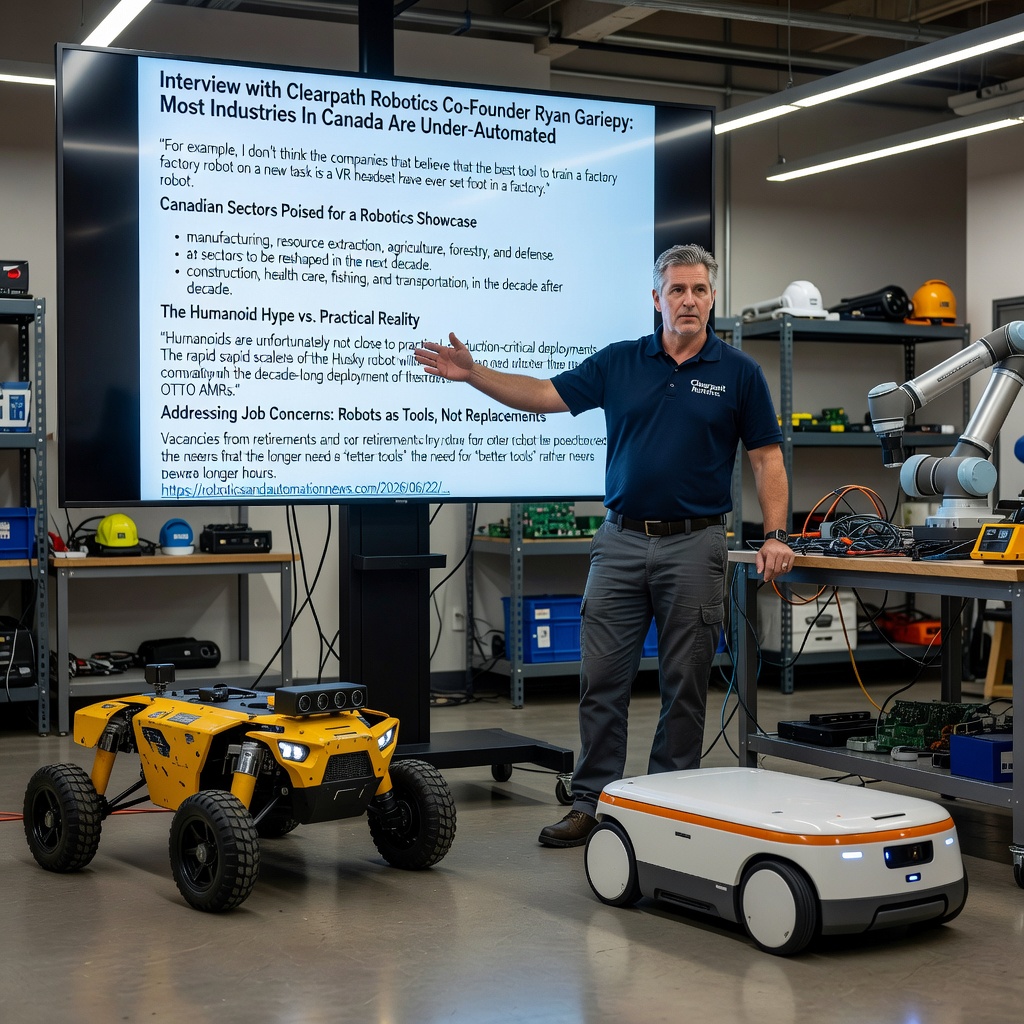
On the question of implementation barriers, Gariepy noted that a few years ago he would have listed “all of the above”—capital cost, integration complexity, talent shortages, cultural resistance. Now, he added a new element: “messaging confusing the issue.” He criticized well-funded companies that imply new AI models alone can dramatically change adoption without addressing the rest of the practical challenges. “For example,” he said, “I don’t think the companies that believe that the best tool to train a factory robot on a new task is a VR headset have ever set foot in a factory.”
Canadian Sectors Poised for a Robotics Showcase
Gariepy sees the entire Canadian economy as a potential showcase for robotics. Within the next decade, he identified manufacturing, resource extraction, agriculture, forestry, and defense as sectors that could be “fundamentally reshaped by robotics at the societal level.” In the decade after, he added construction, health care, fishing, and transportation.
The Humanoid Hype vs. Practical Reality
Despite growing excitement around humanoid robots and “physical AI,” Gariepy cautioned against overhyping their near-term industrial deployment. “Humanoids are unfortunately not close to practical production-critical deployments,” he said. While there has been a spike in sales to academic and corporate researchers, he noted that doesn’t automatically translate to industrial adoption. He contrasted the relatively quick scaling of Clearpath’s Husky research robot with the much longer, harder journey of deploying OTTO AMRs in factories. “A small handful of us built and scaled the Husky robot in a small number of years. Doing the same with the Otto AMRs took hundreds of us and over a decade.”
Addressing Job Concerns: Robots as Tools, Not Replacements
When asked about worker fears that automation will eliminate jobs, Gariepy emphasized that many North American factories are idling or not even being built due to a lack of capacity. “Millions of manufacturing jobs are projected to be vacant due to retirements, and there’s a strong demand to do even more building in North America, not less.” His response: “Our workers don’t need to work longer hours; they need better tools. Robots are those tools.”
Policy Recommendations: A National AI Strategy That Sees Robotics as Key
Gariepy welcomed the Canadian government’s recent identification of robotics as one of five priority sectors in its updated National AI Strategy. “This is a great signal to investors and industry,” he said. He is now watching closely to see how both federal and provincial governments reinforce that statement with concrete action, calling it “one of the most important things for the industry” in recent years.
The source for this article is https://roboticsandautomationnews.com/2026/06/22/interview-with-clearpath-robotics-co-founder-ryan-gariepy-most-industries-in-canada-are-under-automated/102695/.