
How compact cobot integration enhances autonomous mobile robot applications
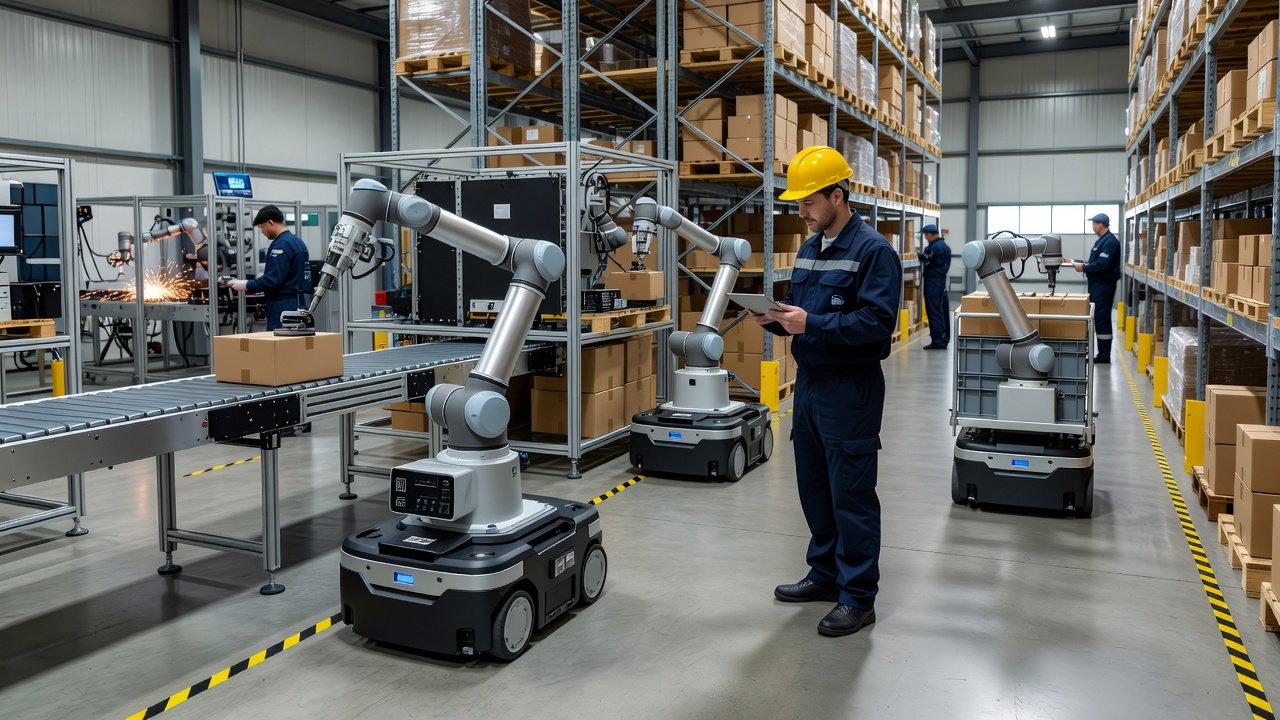
The rise of warehouse automation is reshaping pick-and-place, palletizing, and machine-tending operations as productivity demands and labor shortages intensify. Autonomous mobile robots (AMRs) and collaborative robots (cobots) are increasingly being combined into mobile manipulators, allowing workers to interact more closely with automated systems. Cobot adoption has surged tenfold from 2018 to 2025, with seven-axis, force- and power-limited arms gaining popularity for their ability to mount on AMRs and reach into confined spaces.
These compact cobots deliver precision in repetitive tasks such as picking, assembly, screwing, labeling, and welding, helping companies address ongoing labor challenges. By integrating cobots onto AMRs, facilities can extend these benefits across the entire workspace, reducing the need for multiple fixed robot stations and minimizing manual touchpoints. Mobile manipulators can also handle loading and offloading materials, as well as transporting carts between stations.
Seven-Axis Arms Offer Flexibility
Some industrial operations are replacing traditional six-axis cobots with seven-axis arms mounted on AMRs. The extra axis provides a better range of motion and allows the robot to work more efficiently around obstacles and closer to its base—areas where six-axis arms struggle. This flexibility enables the system to complete more tasks with higher accuracy and in varied orientations.
A key advancement in next-generation cobots is the elimination of the external control cabinet. Earlier mobile cobot setups required a large controller housed in a nearby cabinet, but newer models integrate the controller into the arm's slim base. These cobots can also run directly off the AMR’s batteries, creating a more compact solution that improves both functionality and the robot’s footprint within the facility.
Safety and Infrastructure Considerations
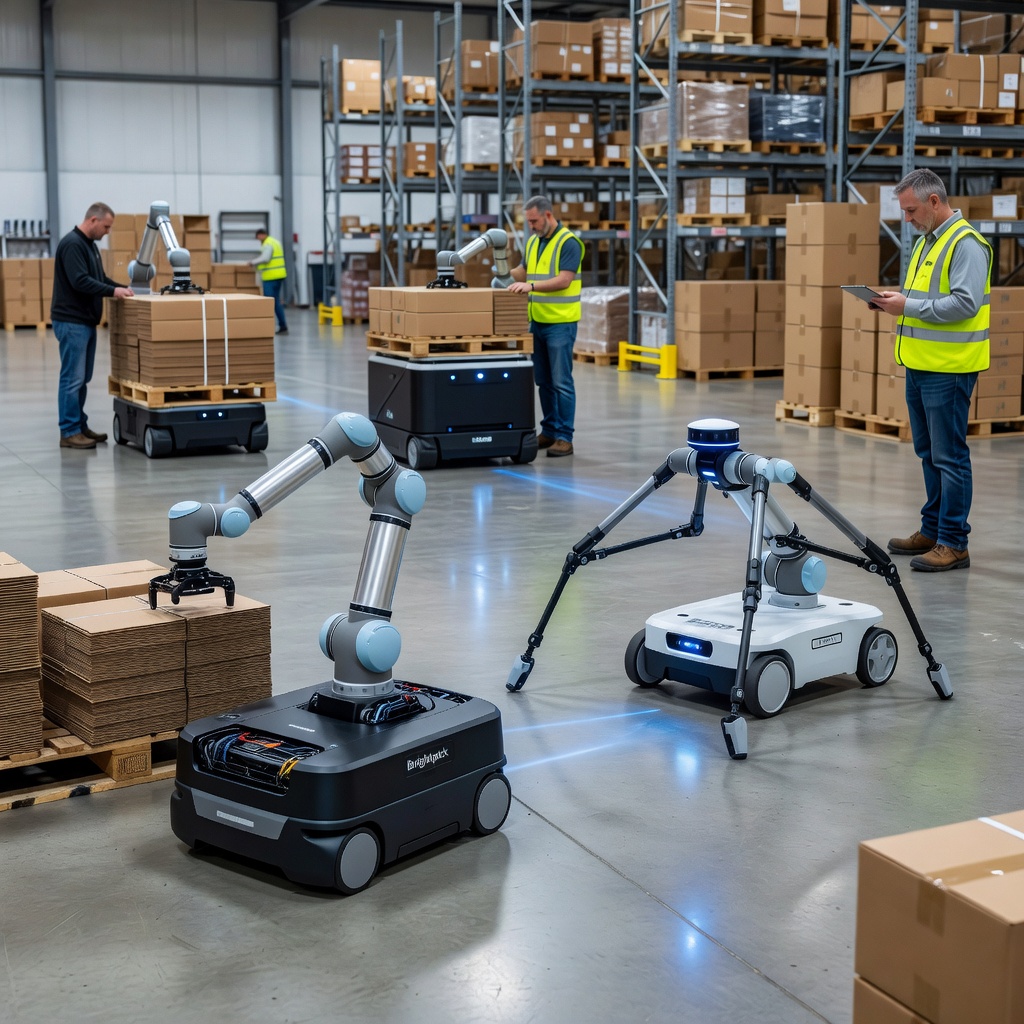
Workers accustomed to strict safety protocols around large industrial robots face a different dynamic with compact mobile manipulators. Because these cobots prioritize collaboration and engagement over high speed, daily interaction is easier and safer, requiring fewer precautions. However, proper safety assessments for workcells, workpieces, and processes remain essential.
When navigating facilities, AMRs generally have priority in high-traffic zones to ensure smooth, bottleneck-free movement. Physical infrastructure barriers are less of a concern than they were for earlier autonomous guided vehicles (AGVs), which relied on magnetic tape or lead tape for guidance. Modern AMRs use built-in lidar for autonomous maneuvering, making them far more flexible. Recent examples of such mobile manipulators include Brightpick’s Autopicker, Mantis Robotics’ new system, and Locus Array.
Adoption and Workforce Impact
Despite lingering skepticism about pricing, integration, and return on investment, warehouse automation adoption has steadily increased. Combining cobots with AMRs offers a cost-effective way to automate repetitive manual tasks, freeing workers for more complex responsibilities. Studies show that working alongside robots can improve job satisfaction by reducing physical strain and injury, which helps lower turnover rates. The International Federation of Robotics (IFR) reports that robotics enhances warehouse competitiveness through quality improvements, while a separate Exotec study found that 98% of workers said automation makes them more productive.
As decision makers evaluate further investments, they must balance human workers with emerging technologies like mobile manipulators and humanoid robots. For warehouses where repetitive tasks and productivity remain top priorities, integrating seven-axis cobots onto AMRs can boost efficiency while protecting worker well-being.
Source: This article is based on material provided by Chris Hapsias, an application engineer at Kassow Robots, a Copenhagen-based developer of lightweight industrial cobots. The company notes that despite their extensive reach, these cobots are both strong, fast, and maneuverable in tight spaces thanks to the seventh axis.
The source for this article is https://www.therobotreport.com/how-compact-cobot-integration-enhances-autonomous-mobile-robot-applications/.