
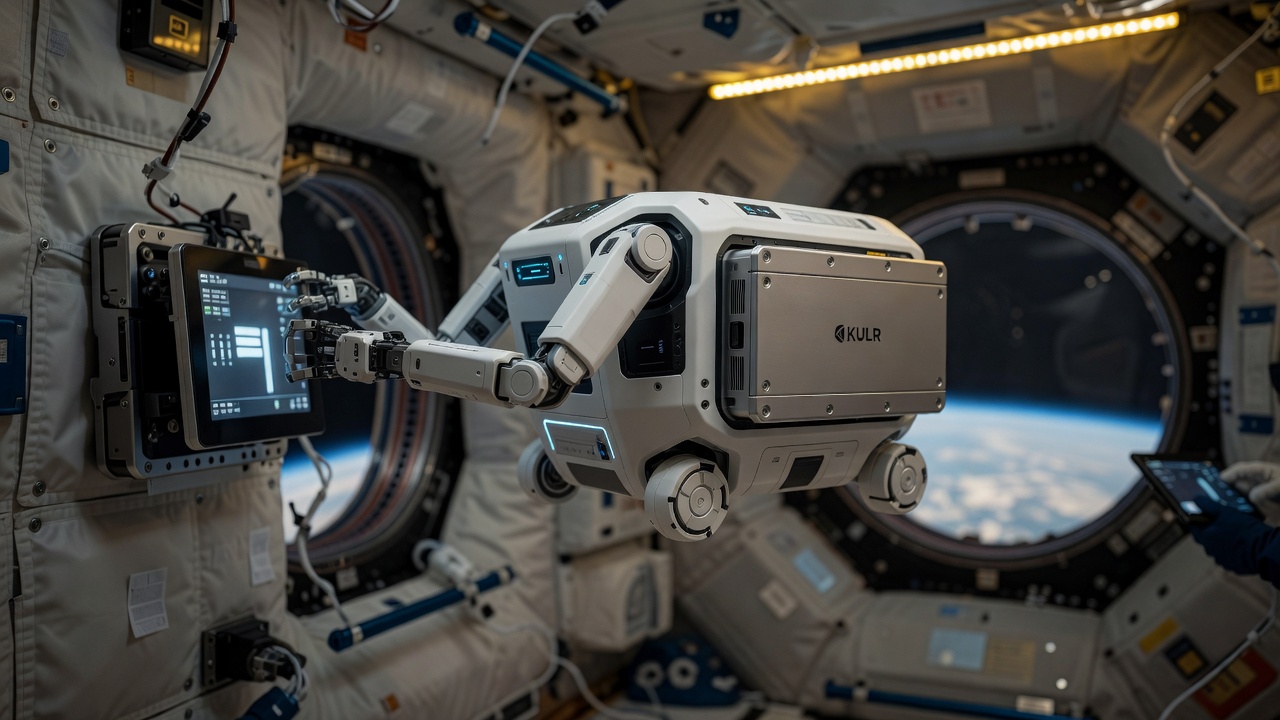
Icarus Robotics Selects KULR Technology to Power JOY Free-Flying Space Robot
Icarus Robotics has announced it will use KULR Technology Group’s battery systems to power JOY, its autonomous free-flying platform, which is scheduled to travel to the International Space Station (ISS) in early 2027. The agreement covers the supply of KULR ONE Space (K1S) battery systems to power JOY’s onboard operations as it autonomously navigates and performs tasks aboard the ISS.
KULR, based in Webster, Texas, engineered the K1S system to meet NASA safety standards, and the technology has already been validated on the Artemis II crewed lunar mission.
Safety and Flight Heritage Key Factors in Decision
Ethan Barajas, co-founder and CEO of Icarus, said flight heritage was the primary reason for choosing KULR. “In the space domain, flight heritage is everything,” Barajas explained. “If you can point NASA to components that have already worked in space, the approval process moves much faster. KULR’s battery architecture has already flown on the Artemis program, which means when we’re working with Voyager and the ISS team, we can point to that and say, ‘This is a known variable.’ For a young startup trying to move fast, that matters enormously.”
He also highlighted the importance of domestic manufacturing. “KULR manufactures everything domestically—engineering, production, testing—which is increasingly important as we think about supply chain reliability for future missions.”
Icarus first outlined its plan to send JOY to the ISS in March, when it secured a mission management contract with Voyager Technologies. The robot, powered by embodied AI, is designed to assist with routine tasks, infrastructure maintenance, and future commercial space station activities. The New York-based startup aims to free up astronauts for higher-value research and mission objectives. Last year, Icarus raised $6.1 million in seed funding and has since focused on making JOY a scalable, production-ready system.
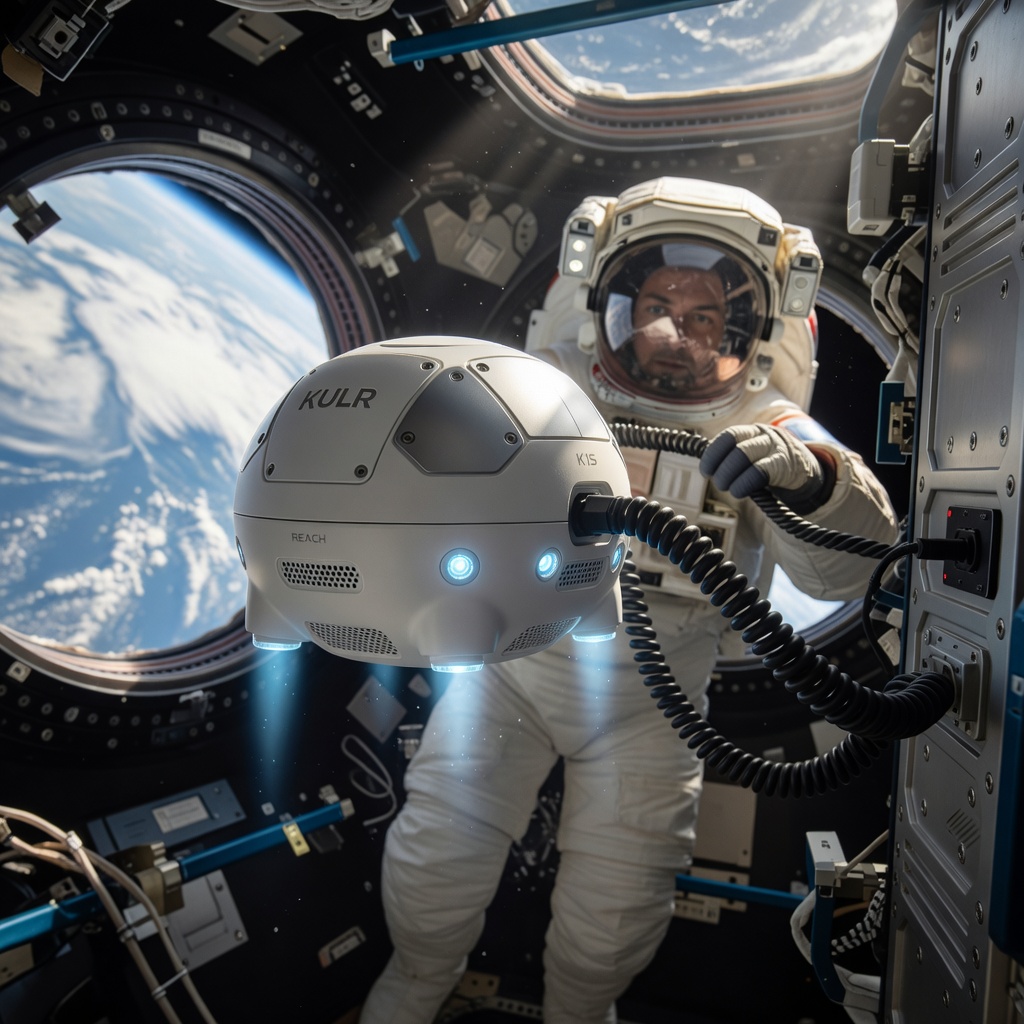
Charging JOY in Space: Safety Rules the Process
NASA imposes strict battery requirements for human spaceflight, and Barajas noted the stringent standards. “Batteries for human spaceflight are an entirely different game,” he said. “The governing standard is JSC 20793, NASA’s crewed space vehicle battery safety requirements, which dictates how any battery flying near astronauts has to be designed and tested.”
Batteries are sorted into three risk classifications, and anything over 80 watt-hours falls into the top tier, which NASA calls “catastrophic.” For high-power untethered platforms like JOY, the battery pack becomes large, and NASA permits no cell-to-cell propagation. “KULR’s KULR ONE Space system is built to that standard, which includes passive propagation resistance,” Barajas explained. “That means if a single cell goes into thermal runaway, it can’t propagate through the rest of the pack.”
The K1S system is built on KULR’s lightweight REACH battery architecture, offering high energy density with low mass. It uses cells qualified through Initial Lot Assessment, Lot Acceptance Testing, and NASA WI-37A cell screening protocols.
Initially, JOY will rely on crew assistance for charging. “JOY will be fully crew-tended at first, and this is mainly a safety decision,” Barajas said. “Early on, an astronaut charges the robot manually, the same way you would plug in any piece of equipment, which keeps a human in the loop while we build up operational history near the crew.” He added that autonomous docking and charging capability will be rolled out later as the platform matures and clearance is earned. “Autonomous docking is the unlock that lets us fully take crew time out of the loop and operate in uncrewed environments.”
Looking Ahead to 2027 and Beyond
JOY is scheduled to launch as part of the JOYRIDE-1 mission in early 2027. By integrating KULR’s space-qualified battery architecture, thermal management, and NASA heritage, Icarus aims to streamline its path to first launch and future missions.
“The 2027 ISS deployment is the foundation, but the expansion from where we’re at now is going to be massive,” Barajas said. “Right now, we’re being very conservative, building the partnership with KULR and making the small tweaks necessary to fit our platform for this first deployment.”
He noted that future missions in vacuum conditions will involve more extreme thermal environments, radiation, and temperature gradients. “That’s when the work with KULR gets really exciting – really pushing the envelope of what these batteries can do together.”
Given that it costs $130,000 per hour to keep a person alive in space, much of which goes to sleep, exercise, and other necessities, the value of an astronaut’s time is enormous. Barajas sees robotic labor as essential for the orbital economy. “Robotic labor has to be part of space stations moving forward. Whether you’re doing large-scale assembly, servicing, or manufacturing, it has to be there for the orbital economy to take off.”
He added that each deployment with KULR’s K1S system builds flight heritage that transfers across the entire ecosystem, from commercial stations to future missions. “It becomes a known variable, and that decreases the friction for the whole industry, not just for us.”
The source for this article is https://www.therobotreport.com/icarus-robotics-uses-kulr-technology-to-power-joy-free-flying-space-robot/.