Nasa turns to robotic spacecraft to save telescope from falling back to Earth
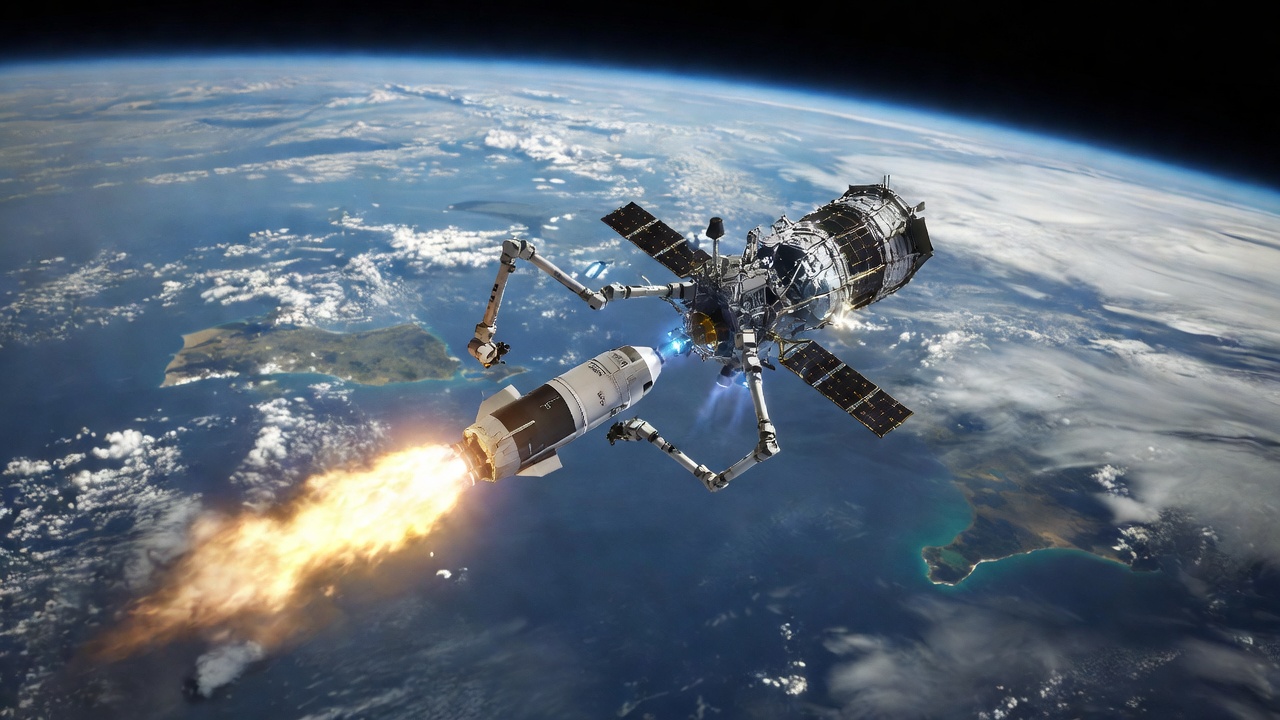
Nasa is launching a daring salvage operation as early as Tuesday to prevent the Swift Observatory, an aging space telescope, from plunging back to Earth. The $30 million mission deploys a robotic spacecraft built by start-up Katalyst Space Technologies, which will dock with Swift and boost it to a higher, more stable orbit.
The three-armed Katalyst vehicle will chase down Swift after lifting off aboard a Pegasus rocket, which launches from an aircraft over the Pacific Ocean’s Marshall Islands. If all goes as planned, the maneuver will extend the telescope’s life and allow it to continue studying some of the universe’s most powerful explosions.
Swift’s Declining Orbit
Since its launch in 2004, Swift has been scanning the cosmos for gamma-ray bursts and other high-energy events. However, recent intense solar activity has increased atmospheric drag, causing the telescope to sink faster than expected. Without an immediate boost, Swift risks burning up in Earth’s atmosphere, ending its two-decade mission.
Katalyst CEO Ghonhee Lee emphasized the urgency, noting that Swift must reach a higher orbit before its altitude drops too low for safe intervention.
Future Rescue for Hubble
The Hubble Space Telescope—also drifting lower due to heightened solar activity—could be the next target. Lee stated that Katalyst’s next-generation robotic vehicle, still in development, might be able to rescue the much larger Hubble within a couple of years, offering a potential lifeline for another iconic observatory.
The source for this article is https://www.scmp.com/news/world/united-states-canada/article/3358714/nasa-turns-robotic-spacecraft-save-telescope-falling-back-earth.