
Palm Garden AI Develops Coherence Guard for Human-Facing Robots
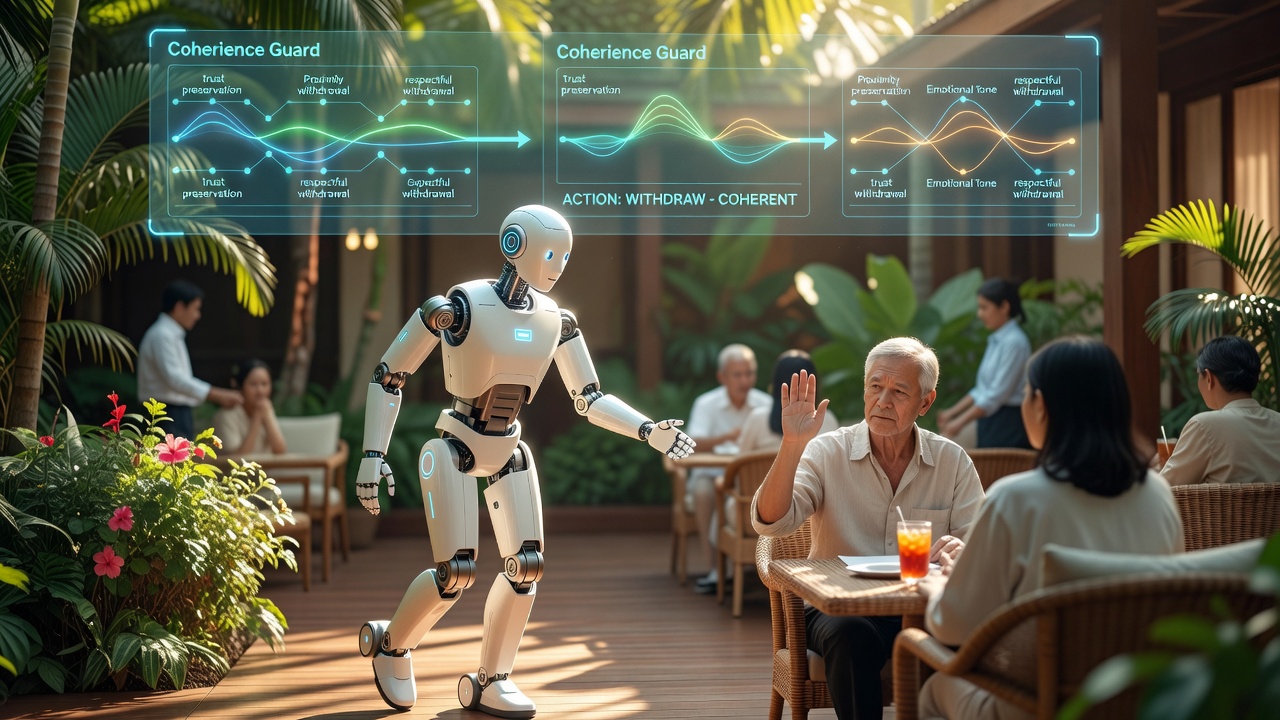
As general-purpose robots and humanoids advance, the software stack needed to make them useful around people is evolving alongside them. Palm Garden AI has introduced Coherence Guard, which it calls a “platform-agnostic relational decision layer for human-facing robots.” The system is designed to evaluate whether a robot’s proposed action is relationally appropriate before or during execution, without replacing existing perception, motion planning, or control stacks.
“Before a robot executes an action, the layer can evaluate whether the action is relationally coherent in a real human environment,” said Joachim Scheuerer, CEO of Palm Garden AI. This includes signals such as timing, proximity, boundary requests, emotional tone, trust preservation, respectful withdrawal, and the difference between technically possible and socially appropriate action. The company believes that as humanoids enter hospitality, care, retail, education, and domestic settings, such a layer may become essential infrastructure.
Palm Garden AI, with offices in Germany and Thailand, built its ANATTA 9 behavior infrastructure on the Transwarp Cloud Operating System (TCOS). Coherence Guard sits above or beside existing robot control, SDK/API, ROS 2, planning, or world-model systems. While physical world models help AI understand objects and movement, Palm Garden’s Relational Infrastructure Framework (RIF) adds an understanding of roles, intentions, vulnerabilities, and future consequences. The RIF is now available upon request.
Addressing the Gap in Service Robot Capabilities
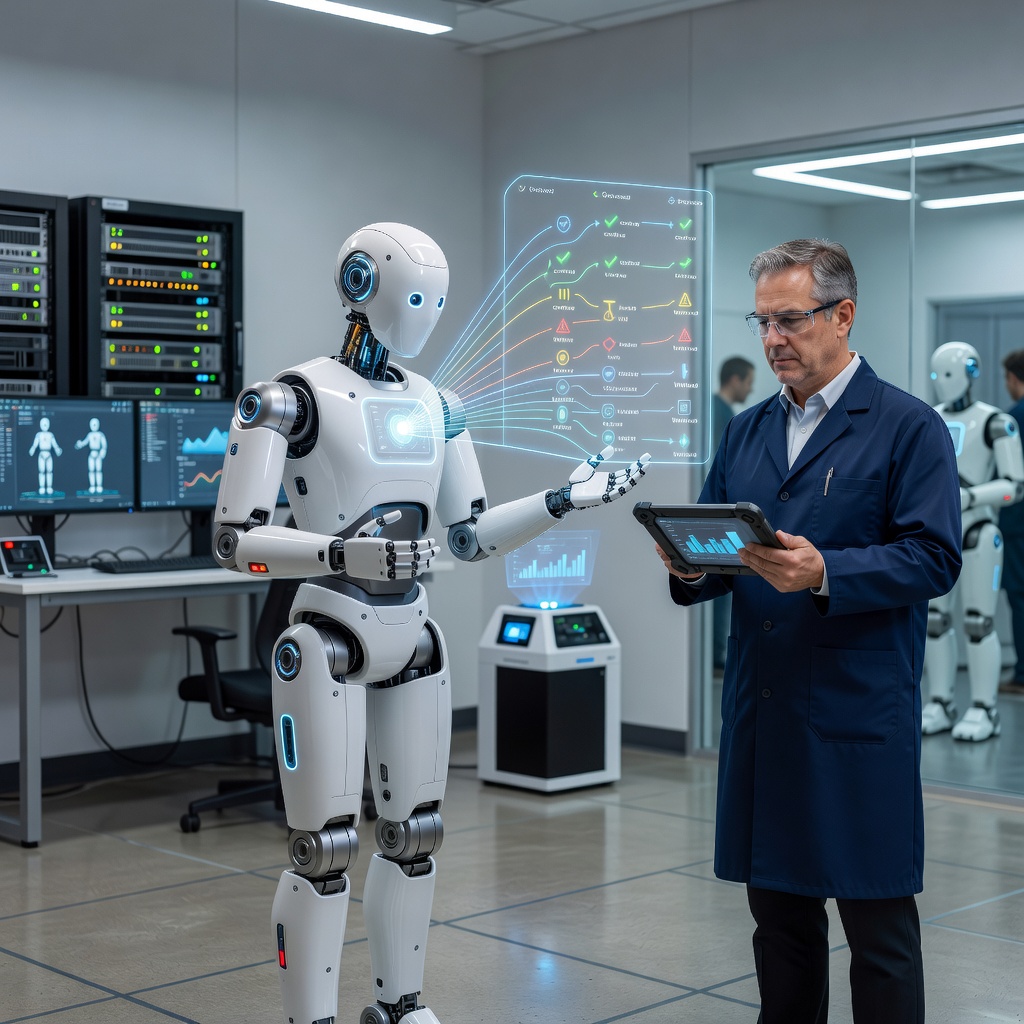
Scheuerer explained that the need for Coherence Guard emerged from two directions. First, many current service robots are already capable in navigation, speech, perception, and task execution, but the difficult moment in real human environments is often the relational decision around the task—when to approach, pause, withdraw, or explain. Second, work at the Palm Garden Retreat in Thailand exposed the team to real-world interaction situations involving arrival, orientation, vulnerability, trust-building, misunderstanding, and respectful withdrawal. In these scenarios, a technically correct action can still feel wrong if timing, distance, tone, or context are not coherent.
Coherence Guard was developed to fill this missing layer, evaluating whether a proposed action is relationally appropriate without replacing robot control.
Base Behaviors from Human Interaction Observations
Palm Garden AI has developed a set of base behavior patterns from three years of structured observation, retreat practice, and human interaction training. These include greeting and orientation, supportive presence, non-intrusive assistance, respectful withdrawal, escalation when uncertainty is high, and coherence-preserving explanation.
A key benchmark is “respectful withdrawal”: if a person shows discomfort or asks for space, the robot should pause, acknowledge the signal, increase distance, reduce expressive intensity, and return to a neutral state. Scheuerer considers this a core behavior for hospitality, eldercare, guidance, and domestic environments.
The company’s expertise comes from long-term work in human interaction, psychotherapy-related software, retreat facilitation, relational training, and AI behavior design, rather than traditional academic HRI labs. Scheuerer noted precedents in aviation safety monitors, collaborative robotics safety envelopes, AI guardrails, and autonomous systems that separate task planning from governance checks. Coherence Guard applies a similar principle specifically to relational coherence.
Complementing Existing Safety Systems
Coherence Guard is designed to complement formal safety systems, not replace them. Certified robot safety must remain at hardware, control, emergency-stop, collision-avoidance, and risk-assessment levels. The layer evaluates candidate actions from a relational perspective: whether the robot should continue, pause, explain, ask for confirmation, reduce proximity, or withdraw.
As humanoid standards evolve, such layers become more important because humanoids operate closer to people and are often socially interpreted. Coherence Guard supports auditability, logging, scenario testing, and configurable thresholds to adapt to different compliance environments.
Deployment and Commercial Model
The architecture is flexible. For latency-sensitive or privacy-sensitive situations, Coherence Guard can run on the edge device or on premises. Cloud components support simulation, analytics, configuration, and fleet-level learning, but the real-time coherence check should be local-first. The preferred deployment model for human-facing robots is local-first, as immediate relational decisions should not depend on cloud latency.
Palm Garden AI is preparing a commercial model that likely involves a licensed software layer with optional SaaS components for configuration, simulation support, analytics, and updates. The core IP is patent-pending, so it will not be fully open-source, but integration interfaces are designed to be open and platform-agnostic, compatible with ROS 2, SDK/API, and simulation-first workflows.
To ensure data validity, the company uses simulation as a first filter, followed by ROS 2 or platform simulation, then limited real-robot pilots. Conclusions are framed as compatibility and behavioral hypotheses. Narrow, observable benchmarks—such as approach distance, pause timing, withdrawal behavior, and escalation triggers—are validated with real human feedback.
Partnerships and Next Steps
Palm Garden AI is in active technical and partnership evaluation with several robotics providers. A technical call with Robotera has led to an NDA and simulation-first compatibility pathway. Compatibility with Hanson Robotics has been discussed, and the next phase is under NDA. The company has also evaluated interface compatibility with ROS 2/SDK-based humanoid systems and mapped possible connections to NVIDIA Isaac/GR00T-style simulation environments.
Next steps include finalizing the patent-pending technical framing, completing Phase 0 compatibility reviews with selected robot platforms, building simulation-first benchmarks for human-facing service scenarios, running a limited pilot focused on greeting, guidance, explanation, and respectful withdrawal, and preparing a clearer technical package for robotics companies.
“Our goal is not to create another robot body or another conversational AI system. Our goal is to provide a relational decision layer that helps service robots behave more coherently, safely, and respectfully in real human environments,” Scheuerer said.
The source for this article is https://www.therobotreport.com/palm-garden-ai-develops-coherence-guard-relational-decision-layer-human-facing-robots/.