
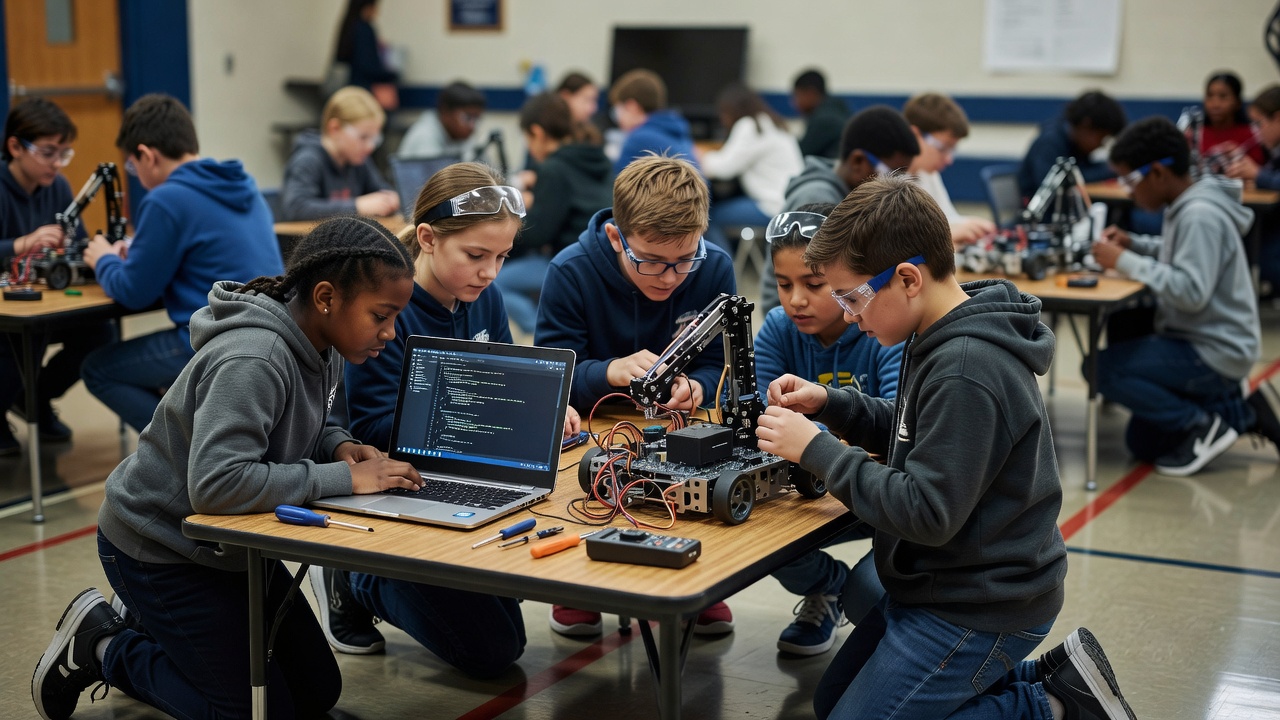
STEM Education in the Classroom: Introducing BotBall
The story of Botball and the Junior Botball Challenge is built on a fundamental shift in educational robotics: moving away from adult-led instruction and placing the full weight of discovery on students. According to Steve Goodgame, executive director of the KISS Institute of Practical Robotics (KIPR), the program was designed to adapt the same rigor used in university-level robotics education for high school, middle school, and even elementary students.
Level Playing Field Across Schools
Botball strictly adheres to the principle of student-led engineering by providing every team with an identical kit of parts. Goodgame emphasized that success depends entirely on the logic of the code and the creativity of the design, not on a school’s budget. “Everybody in the world gets the same box of parts, so it’s a level playing field,” he said in a conversation with The Robot Report. “You can’t buy better parts, can’t make better parts. You have to use what’s in the box, and adults don’t touch the robots when they come to the competition—adults are out of the pits. It’s what the kids can do using the same materials.”
By removing the mentorship model during competition, students learn true accountability. Goodgame noted that participants are not just building a robot; they are managing a project from inception to execution.
Teaching Real Code at an Early Age
While many elementary programs rely on simplified block-based coding, Botball challenges the assumption that young children cannot handle “real” programming languages. The program introduces text-based languages such as C and Python at an early age, treating them as naturally as learning to speak or write. “We kicked around the idea: Could kids really do real programming right at an early age? And so we did a little pilot and found out, yeah, of course they can,” Goodgame said. “So when they’re learning language anyway, it’s actually easier for them.”
Junior Botball Challenge Fosters Inquiry
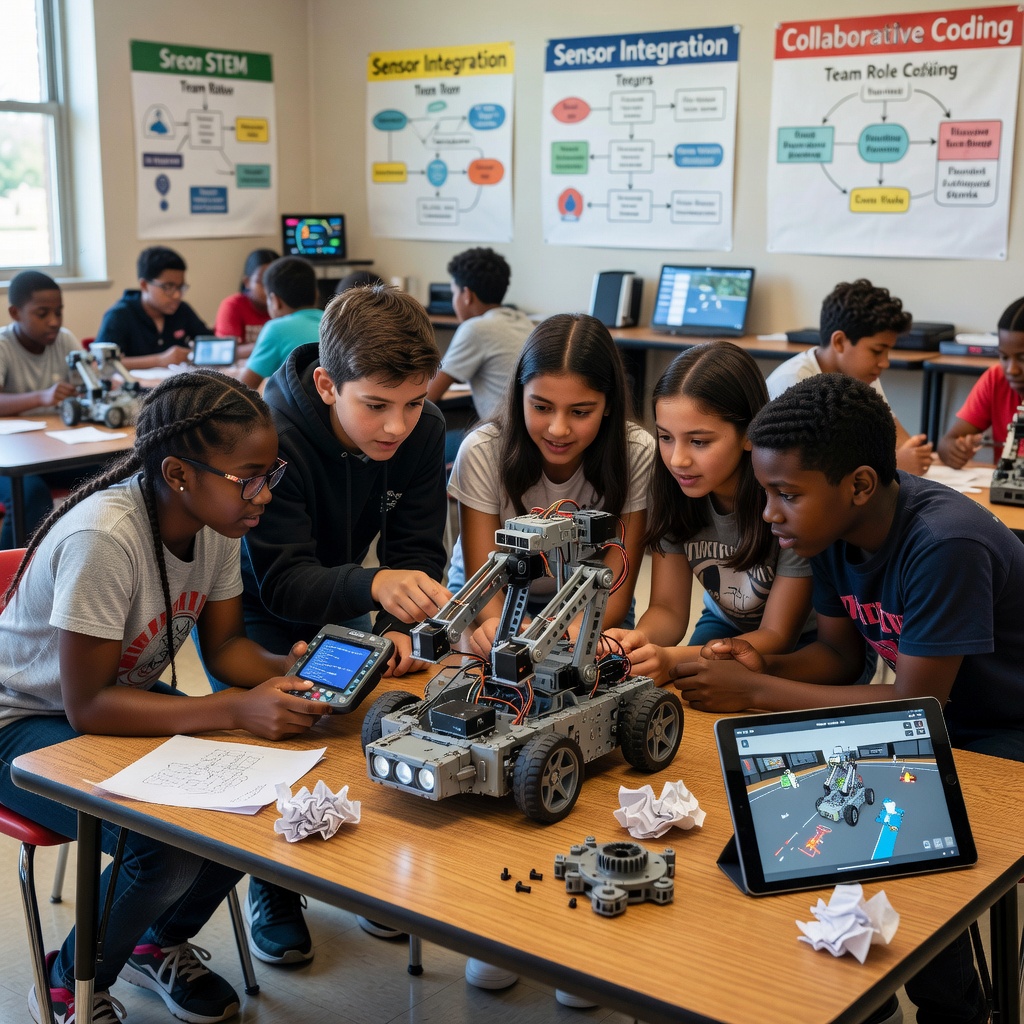
The Junior Botball Challenge (JBC) shifts the focus from head-to-head competition to inquiry-driven problem solving. Instead of one student controlling one robot, JBC uses a specialized controller that allows up to five students to program and run different segments of code on a single robot simultaneously. This collaborative approach encourages teamwork and experimentation.
Integrating into the School Day
Botball is designed not just as an after-school club but as a curriculum that fits into the regular school day. Key elements include fully autonomous operation (robots start with a light sensor and stop after two minutes), a virtual simulator that allows students to iterate designs in a physics-based environment before touching hardware, and an emphasis on failing fast without fear of damaging equipment.
Results: Bridging the Gender Gap
Traditional robotics often mirrors an old assembly line model where one student builds, one programs, and another manages. Botball aims to break that mold by encouraging every team member to become a “polymath” who understands both mechanics and software. According to the organization, this inclusive classroom-based approach has helped bridge the gender gap in STEM: participation among girls jumps from 30% in traditional competitive models to more than 55% in JBC classrooms.
The program is not just a competition; it’s a culture of collaborative, open-ended problem solving designed to prepare students for a future where they must adapt to and master new tools every day. For more information on the upcoming competition schedule, visit the KIPR website.
The source for this article is https://www.therobotreport.com/stem-education-classroom-introducing-botball/.