
Supplier Impersonation Fraud Emerges as Critical Operational Threat for Industrial Manufacturers
The rapid digitization of industrial manufacturing—encompassing robotics, automation systems, and interconnected supply chains—has driven significant efficiency gains. However, this digital interdependence has also introduced cybersecurity risks that extend far beyond traditional IT perimeters. Among the most overlooked threats is supplier impersonation fraud, where attackers exploit trusted vendor relationships to manipulate procurement workflows, redirect payments, or inject fraudulent invoices into automated systems. As manufacturing becomes increasingly data-driven, these attacks are evolving from isolated security incidents into full-fledged operational risks.
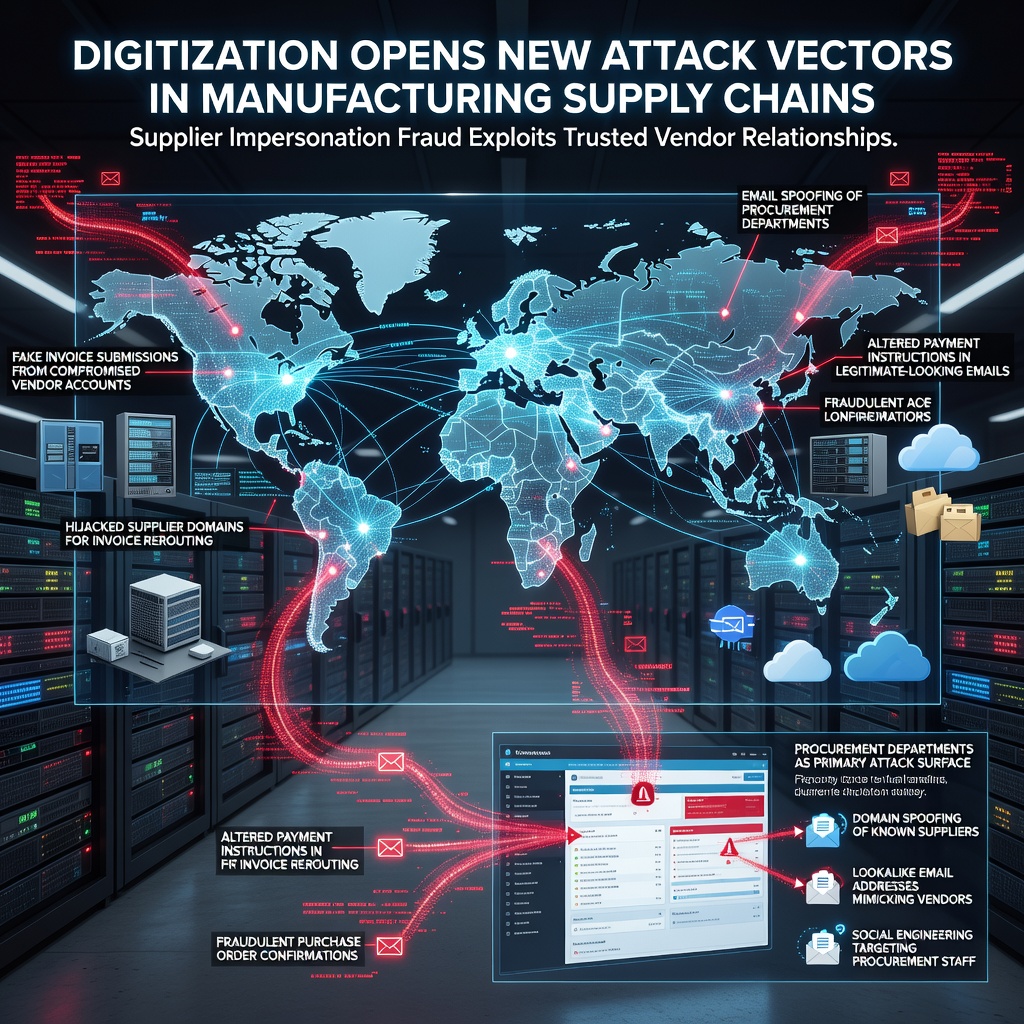
Modern manufacturing relies on tightly coordinated supplier networks spanning logistics providers, component manufacturers, software vendors, and maintenance contractors. This complexity creates multiple entry points for attackers, who typically exploit trusted communication channels such as email. Common attack vectors include fake invoice submissions from compromised vendor accounts, email spoofing of procurement departments, altered payment instructions in legitimate-looking emails, hijacked supplier domains for invoice rerouting, and fraudulent purchase order confirmations. Because these messages often align with expected operational processes, they can bypass manual verification—especially under tight production timelines.
Automated Systems Amplify Fraud Risks as Email Workflows Integrate with ERP Platforms
As robotics and automation systems become more integrated with enterprise resource planning (ERP) platforms, the financial layer of manufacturing is increasingly connected to digital communication channels. This convergence introduces new risks: automated invoice approvals triggered by email-based workflows, integration between supplier portals and procurement systems, reduced human oversight in high-speed production environments, and greater reliance on third-party digital vendors. Once attackers gain access to trusted supplier channels, they can exploit automation pipelines to push fraudulent transactions through at scale.
Visibility gaps compound the problem. Many manufacturing organizations operate with fragmented digital infrastructures where legacy systems coexist with modern cloud platforms, making it difficult to monitor all email-sending entities. Unmonitored third-party email services, legacy supplier accounts still active in workflows, inconsistent authentication across vendor domains, and lack of centralized reporting on email legitimacy allow impersonation attempts to blend into normal traffic.
Procurement Departments Become Primary Attack Surface for Payment Manipulation
Procurement teams sit at the intersection of finance, suppliers, and operational planning, handling high-value transactions, frequent supplier communication, time-sensitive approvals, and multiple external stakeholders. This makes them a natural entry point for attackers. Common exploitation techniques include domain spoofing of known suppliers, lookalike email addresses mimicking vendors, compromised supplier inboxes for invoice injection, and social engineering targeting procurement staff. These methods rely on trust rather than technical exploitation, making them harder to detect through traditional perimeter security tools.
The impact extends beyond cybersecurity to production continuity. Delayed payments can cause supply chain disruptions, misrouted funds damage vendor relationships, component deliveries may be temporarily halted, and audit and reconciliation workloads increase. According to BBC reporting, cyber-enabled fraud continues to rise globally, with attackers increasingly targeting operational workflows rather than just data systems—a trend particularly relevant in manufacturing, where downtime carries significant financial consequences.
Email Authentication Becomes Critical for Industrial Operational Resilience
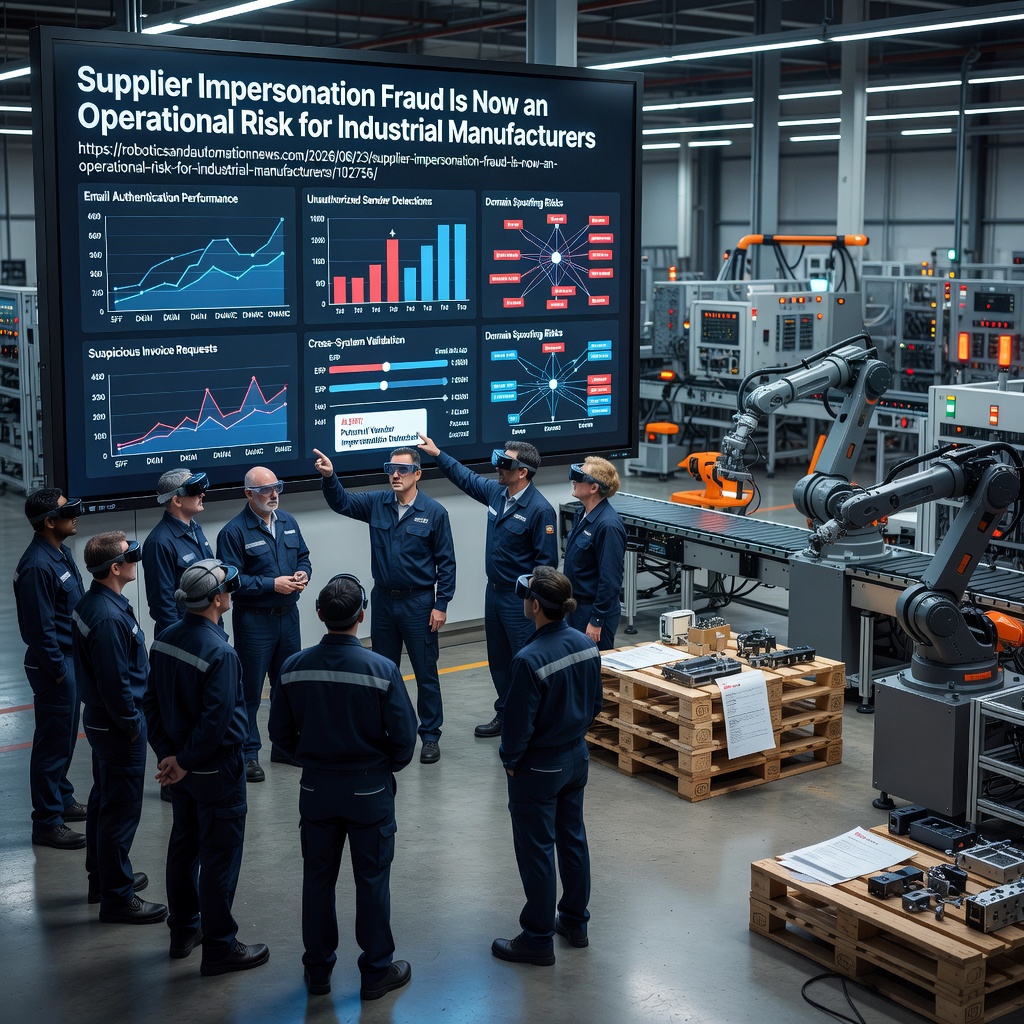
Email authentication protocols such as SPF, DKIM, and DMARC are becoming essential components of industrial cybersecurity strategies. They help verify whether emails claiming to come from suppliers are genuinely authorized. However, implementation alone is insufficient; manufacturers require ongoing visibility into authentication performance across their entire supplier ecosystem. Key benefits include detection of unauthorized sender activity, reduced domain spoofing risk, improved supplier communication integrity, enhanced audit readiness, and better alignment with compliance frameworks.
Forbes research highlights that supply chain resilience increasingly depends on digital trust mechanisms, especially as industries adopt more automated procurement systems. Platforms like Suped offer practical visibility into invoice fraud and supplier impersonation without requiring deep email expertise, helping industrial and automation companies reduce exposure.
Integrating Security into Automation Workflows to Mitigate Cascading Disruptions
As factories adopt more advanced robotics and automated production systems, cybersecurity controls must evolve alongside them. Manufacturers are increasingly integrating supplier authentication checks into procurement systems, real-time monitoring of email domain activity, automated alerts for suspicious invoice requests, and cross-system validation between ERP and email logs. This convergence of IT, OT, and financial systems reflects a broader shift toward unified operational security.
Supplier impersonation fraud underscores how cybersecurity in industrial environments is no longer confined to IT departments. It directly influences production continuity, financial integrity, and supplier trust. As manufacturing ecosystems become more automated and interconnected, organizations must treat email authentication and supplier validation as core components of operational resilience rather than optional enhancements. The increasing convergence of robotics, automation, and digital supply chains means that even a single compromised email channel can cascade into broader operational disruption if not properly monitored and controlled.
The source for this article is https://roboticsandautomationnews.com/2026/06/23/supplier-impersonation-fraud-is-now-an-operational-risk-for-industrial-manufacturers/102756/.