
Why Combining Robot Dexterity with Mechanical Positioning Is Key for Complex Assembly Operations
As robotics professionals look ahead to explosive industry growth driven by disruptive technologies, the spotlight increasingly falls on mechanical positioning. While automation remains the ultimate goal, experts now recognize that a robot’s mobility, range, and speed are fundamentally tied to its positioning systems. By integrating these systems more thoughtfully, manufacturers can unlock greater efficiency in complex assembly operations.
Precision positioning defines both a robot’s potential and its limits. Regardless of a machine’s power or flexibility, its reach is constrained by its physical mechanisms—joints, actuators, and the systems that guide them. When these components are matched with smart positioning solutions, the robot can operate at peak performance, making such integrations critical for high-stakes production environments.
Key Positioning Systems Driving Dexterity
Linear Transfer Systems
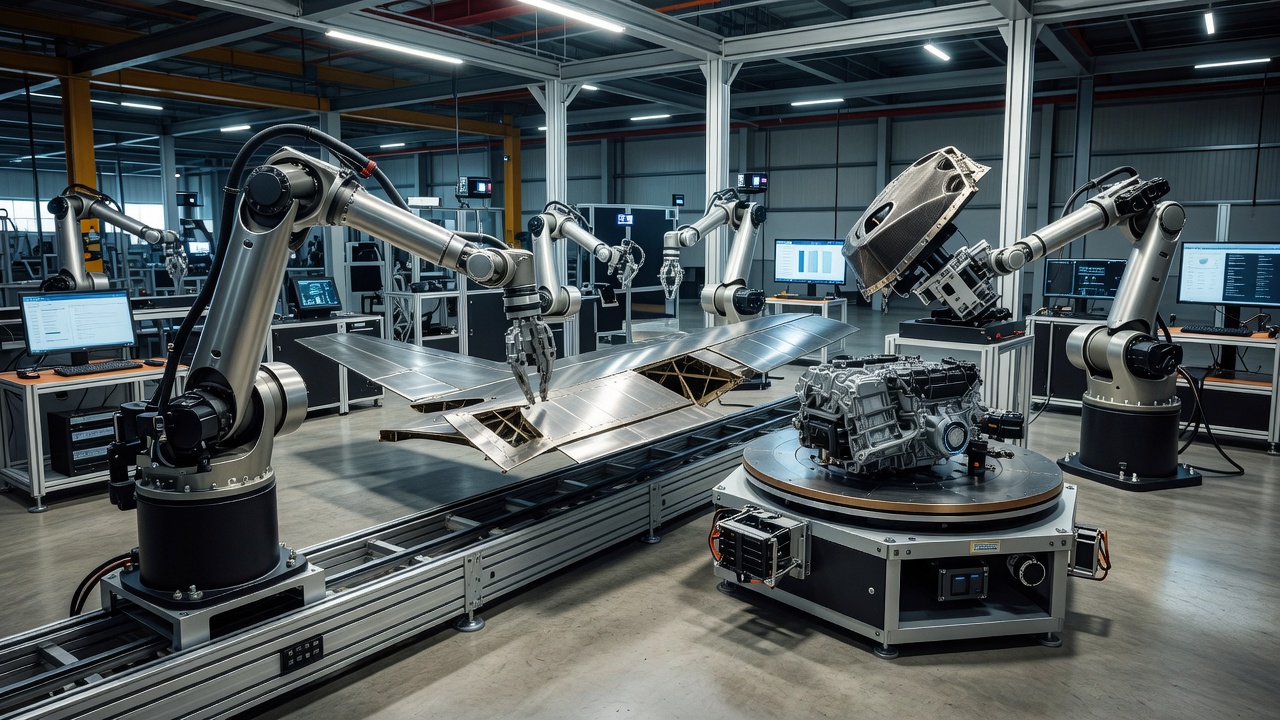
Linear transfer units expand a robot’s range of motion by enabling fluid movement along a track. This capability is especially valuable for large-scale projects, such as aerospace and defense manufacturing, where robots must navigate massive assemblies and execute multiple tasks. Emerging models offer seventh-axis mobility and rapid deployment, allowing stations to reconfigure quickly for changing production needs.
Rotary Index Tables
Rotary index tables deliver precision and speed in repetitive processes. Embedded in robots, they permit rapid rotational movement during assembly, empowering machines to perform multiple tasks simultaneously—such as assembly, packaging, and quality control—without sacrificing cycle time.
Advanced Workpiece Positioners
Multi-axis workpiece positioners free robots from fixed pedestals or plates, enabling them to rotate and tilt into multiple orientations. This flexibility is crucial for industries like automotive and aerospace, which often handle parts with unusual geometries. With such positioners, robots can navigate confined spaces more effectively, taking on tasks that previously required manual intervention.
Vision-Based Positioning and Compensation
Software, sensors, and cameras collectively enable real-time responsiveness in robotic systems. When a sensor detects an obstacle, the robot adjusts its position instantly. Over time, repeated corrections can cause cumulative misalignment, but management software helps monitor metrics to maintain consistency. This dynamic compensation is vital for maintaining long-term accuracy.
Case Studies in Robotic Innovation
FANUC and the LR Mate Series
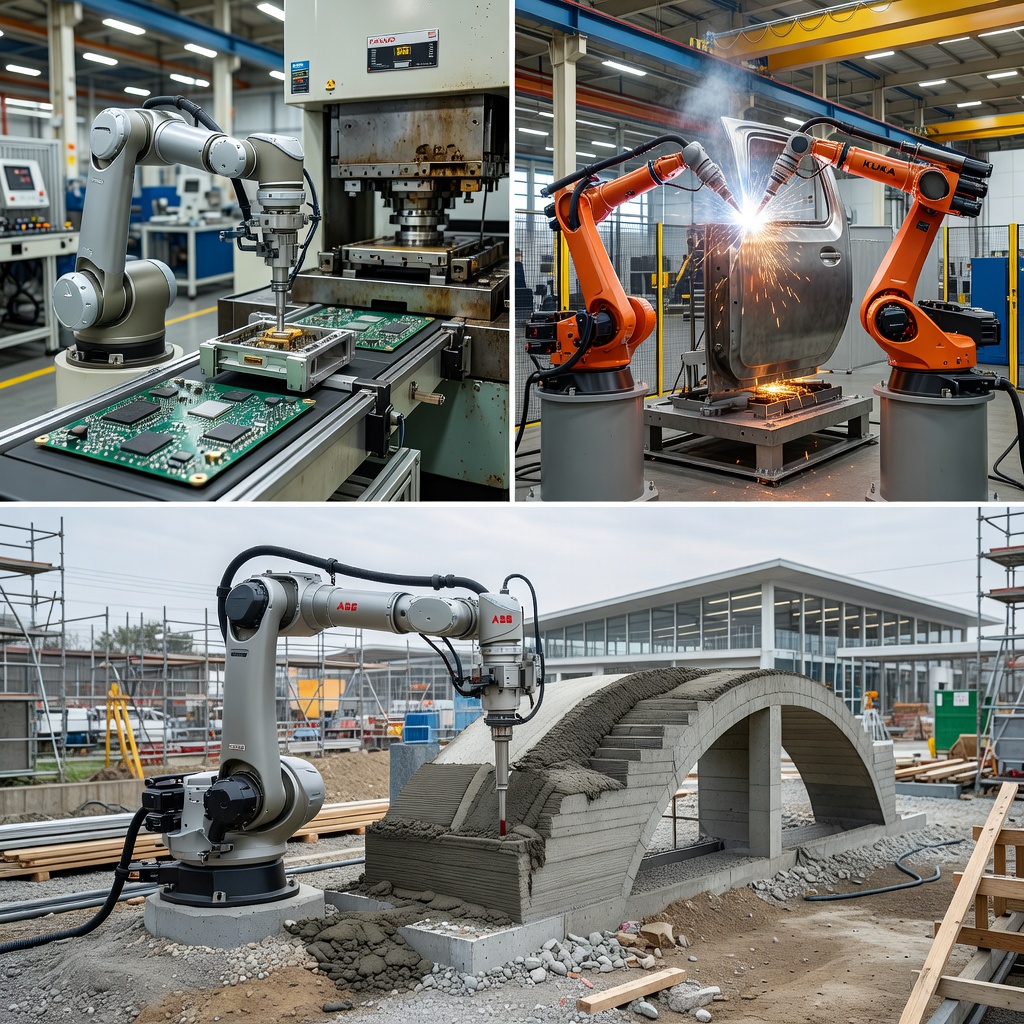
FANUC, a leader in industrial automation, developed the LR Mate Series of compact robots for assembling intricate products like electronics and medical devices. Metal stamping company Pentaflex integrated FANUC’s technology into its legacy setup, leveraging skillful positioning to reduce labor units per shift while creating a more flexible production floor.
KUKA and the KR QUANTEC Series
German manufacturer KUKA designed the KR QUANTEC series for heavy-duty applications, particularly linear transfers in automotive and construction assembly. Door panel producer Meiller Aufzugtüren, known for high-volume custom orders, adopted KR QUANTEC robots to streamline welding. Two pedestal-mounted robots with extended reach demonstrated the advantages of precise positioning, handling spot welding, forming, and stamping with consistent energy use—even on bespoke batches.
ABB and the IRB 6700
ABB’s IRB 6700 multi-axis robot was created to automate fabrication tasks. It recently built Japan’s first 3D-printed railway station, thanks to a vertical nozzle whose positioning allowed precise manipulation of mortar. With seven axes of motion, the robot constructed a complex structure on an uneven surface in just one week, producing a practical and aesthetically appealing station that could be erected in six hours. Such dexterity promises significant time and cost savings for constructing everyday infrastructure.
A Future Forged in Collaboration
The future of manufacturing hinges on scalability and the adoption of automated solutions. As digital transformation separates industry leaders from laggards, mechanical positioning will influence every facet of assembly operations. To deliver on the promises of innovation, robots must have positioning systems that are not only optimized today but also interoperable with emerging technologies like artificial intelligence and machine learning. When that synergy is achieved, the collaboration between cobots and the human workforce will redefine productivity and competitiveness.
This article is based on content originally published by The Robot Report and written by Lou Farrell, senior editor at Revolutionized.
The source for this article is https://www.therobotreport.com/why-you-should-combine-robot-dexterity-with-mechanical-positioning-for-complex-assembly-operations/.